

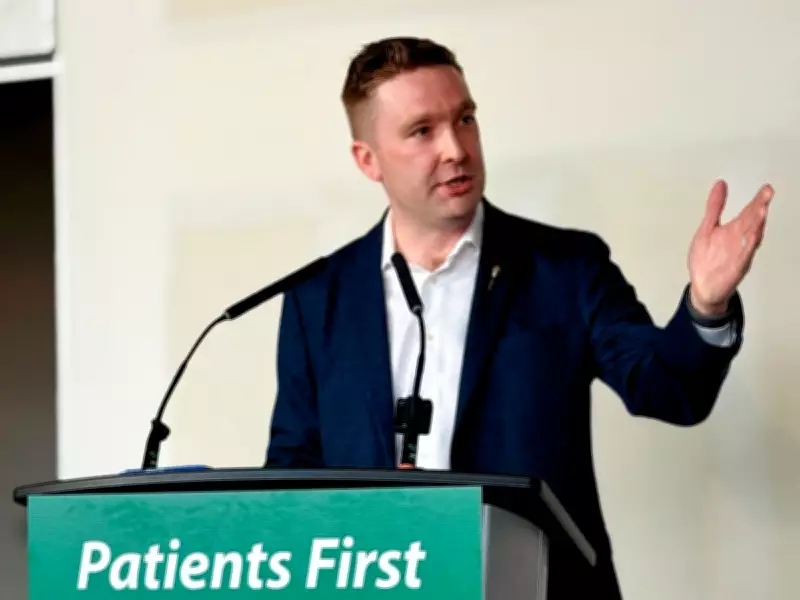
Saskatchewan's Health Budget Targets Longstanding Issues, But Expert Calls for Better Incentives
Saskatchewan's recently announced Patients First Health Care Plan aims to tackle persistent recruitment and retention problems in the province's health sector. However, a Regina-based health policy expert emphasizes that appropriate incentives are essential to address the root causes of the primary care shortage effectively.
Budget Allocation and Training Expansion
With an overall projected deficit of $819 million, the 2026-27 provincial budget allocated $8.4 billion to health care. This funding was announced approximately one week after the unveiling of the Patients First plan, which provided limited details on specific fund distribution.
On the health care front, the province is focusing on expanding training programs. Budget documents indicate a $34 million increase for Saskatchewan post-secondary institutions in the current operating year, with additional annual increases of three percent over the next four years.

The budget includes $4.1 million in new funding to add 20 physician seats and 26 nurse practitioner seats in the upcoming academic year. It also sets aside $9.9 million to finalize respiratory therapy, occupational therapy, and speech language pathology programs launching this fall, according to a provincial news release.
Additional funding will support the University of Saskatchewan's physician assistant program, which was launched last year.
Expert Analysis of Perennial Problems
University of Regina politics and international studies professor Tom McIntosh noted that his initial reaction to the health care plan was that its title sounded familiar. He pointed out that the province has been grappling with similar primary care issues for decades.
"Of course, if you go back a decade and a half or so ago, we had what was called the Patient First Review, which then led to an action plan again on this focus of patients first ... which speaks to the fact that these are kind of perennial problems that governments haven't yet managed to crack completely," he explained.
McIntosh served as a key researcher for former Saskatchewan premier Roy Romanow's Commission on the Future of Health Care in Canada, an 18-month investigation into the sustainability of Canada's health system.
Retention Challenges in Rural Areas
McIntosh acknowledged that these issues are not unique to Saskatchewan and exist across Canada. However, he highlighted that Saskatchewan's thinly distributed population makes it challenging to promote the rural lifestyle associated with many family physician positions.
"We can train them ... We can do that part. We can't make sure they stay," he said regarding the retention hurdle.
According to the Patients First plan, the province has hired 516 health care professionals through the Rural and Remote Recruitment Incentive. The province also offers one-time $2,000 bursaries for students completing final unpaid clinical placements in exchange for a one-year return of service in rural or northern Saskatchewan.
Despite these measures, McIntosh stresses that more effective incentives are necessary to truly resolve the primary care shortage and ensure long-term stability in Saskatchewan's health care system.






