

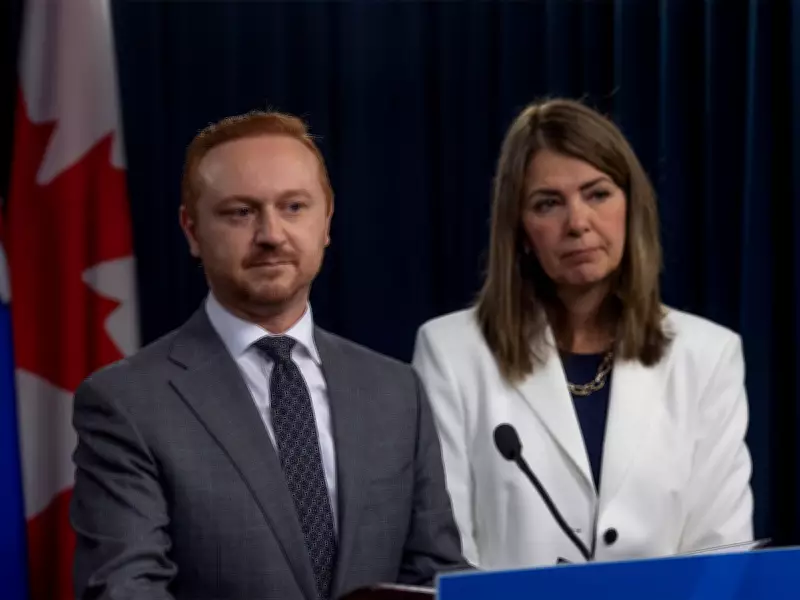
Alberta's New MAID Legislation Sparks Debate Over Personal Liberty
Premier Danielle Smith, who once championed Albertans' right to refuse COVID-19 vaccinations as a matter of personal freedom, now leads a government proposing stringent new restrictions on medical assistance in dying. This legislative shift has ignited intense discussions about the consistency of political principles and the boundaries of individual autonomy in healthcare decisions.
From Pandemic Libertarian to End-of-Life Regulator
During the height of the COVID-19 pandemic, Smith vocally defended Albertans who chose not to receive vaccines, describing them as "the most discriminated against group" in her lifetime. She argued passionately that individuals should maintain control over their own health decisions, even when those choices might risk their wellbeing or survival.
Today, that position has undergone a dramatic transformation. Smith's government, alongside Justice Minister Mickey Amery, has introduced Bill 18—the Safeguards for Last Resort Termination of Life Act—which imposes significant limitations on access to medical assistance in dying across Alberta.

The Specifics of Alberta's Proposed MAID Restrictions
The proposed legislation creates multiple new barriers for Albertans seeking medical assistance in dying:
- Prohibition for individuals whose natural death is not anticipated within twelve months
- Exclusion for those whose sole underlying medical condition is mental illness
- Restriction for people lacking the mental capacity to make their own healthcare decisions
- Elimination of advance requests for future assisted dying before capacity loss occurs
These restrictions create particular challenges for Albertans facing progressive conditions like Alzheimer's disease, who cannot make advance arrangements for assisted dying and then become ineligible once they lose mental capacity. The legislation also affects those experiencing severe, chronic pain who may have more than a year of life expectancy remaining.
The Philosophical Contradiction in Political Leadership
The apparent contradiction between Smith's past libertarian rhetoric and current regulatory approach raises fundamental questions about political consistency. How can a leader who previously advocated for maximum personal autonomy in health decisions now support legislation that significantly restricts end-of-life choices?
This tension highlights what critics describe as a fundamental incompatibility between libertarian principles and political governance. The very nature of political leadership involves creating rules and limitations, while libertarian philosophy emphasizes minimizing government intervention in personal decisions.
Justice Minister's Historical Perspective
Justice Minister Mickey Amery has defended the legislation, asserting that the government stands "on the right side of history" with these new safeguards. This historical framing invites comparison to earlier periods when religious and governmental authorities exerted substantial control over end-of-life decisions and suffering was often viewed as spiritually necessary.
The proposed legislation represents a significant departure from the trend toward expanded end-of-life options in Canada, positioning Alberta with some of the most restrictive MAID regulations in the country.
Broader Implications for Healthcare Autonomy
Beyond the specific restrictions, Bill 18 raises larger questions about the balance between individual autonomy and governmental oversight in healthcare. The legislation establishes that certain types of suffering—whether from mental illness, dementia, or chronic conditions with longer life expectancies—do not qualify for medical assistance in dying under Alberta's proposed framework.
This represents a substantial shift from Smith's previous position that individuals should bear responsibility for their own health choices and consequences. The debate continues as Albertans consider whether this new approach represents necessary safeguards or an unacceptable infringement on personal liberty at life's most vulnerable moments.






