

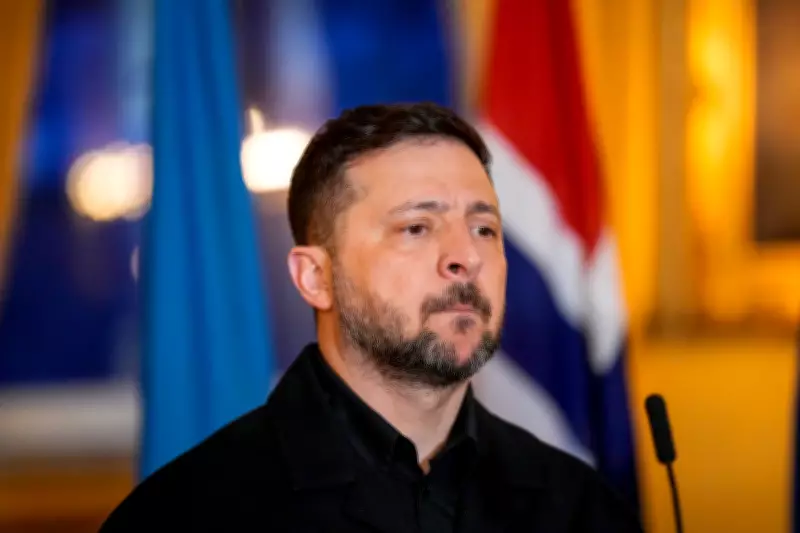
Zelenskyy Voices Frustration Over Perceived U.S. Neglect Amid Iran Tensions
In a candid interview that underscores the complex geopolitical landscape, Ukrainian President Volodymyr Zelenskyy has publicly stated his belief that the United States currently "does not have time for Ukraine" due to escalating tensions and potential military conflict with Iran. This remark, made during discussions on April 14, 2026, highlights growing anxieties in Kyiv about sustained international support as the war with Russia drags on into its fifth year.
Context of the Statement
The Ukrainian leader's comments come at a time when global attention is increasingly fragmented. While Ukraine continues to defend its sovereignty against Russian aggression, the Middle East has witnessed a significant rise in hostilities, with Iran engaging in proxy conflicts and direct confrontations that threaten to draw in major powers, including the United States. Zelenskyy's assertion suggests a fear that Washington's strategic priorities are shifting, potentially at the expense of Ukrainian security assistance.
"We understand the global responsibilities of our allies," Zelenskyy was quoted as saying, "but the reality is that resources and focus are finite. When a crisis like Iran demands immediate attention, it inevitably pulls bandwidth away from other critical issues, including our fight for freedom."

Implications for Ukraine's War Effort
This perceived diversion of U.S. focus could have tangible consequences for Ukraine's military capabilities. The nation has relied heavily on American and Western aid for:
- Advanced weaponry and ammunition supplies
- Intelligence sharing and satellite data
- Financial support for economic stability
- Diplomatic backing in international forums
Any reduction or delay in this support could weaken Ukraine's defensive and offensive operations, potentially altering the dynamics on the battlefield. Analysts note that while the U.S. administration has repeatedly affirmed its commitment to Ukraine, operational realities and competing crises often force difficult prioritization decisions.
Broader Geopolitical Ramifications
Zelenskyy's interview also touches on the delicate balance of international alliances. The simultaneous management of the Ukraine-Russia war and Middle Eastern instability tests the capacity of Western powers to uphold security commitments across multiple theaters. This situation may encourage adversarial nations to exploit perceived vulnerabilities or distractions.
Furthermore, the Ukrainian president's remarks were made during a meeting with Norway's Prime Minister Jonas Gahr Støre in Oslo, indicating efforts to bolster European support as a counterbalance to potential U.S. preoccupations. Strengthening ties with European Union members and other NATO allies becomes increasingly crucial under these circumstances.
Looking Ahead
As the international community navigates these overlapping crises, the sustainability of aid to Ukraine remains a pivotal question. Zelenskyy's candid assessment serves as a reminder of the ongoing human and strategic costs of the war, urging continued vigilance and resource allocation from global partners. The coming months will likely see intensified diplomatic efforts to reassure Kyiv of unwavering support, even as other global hotspots demand attention.






