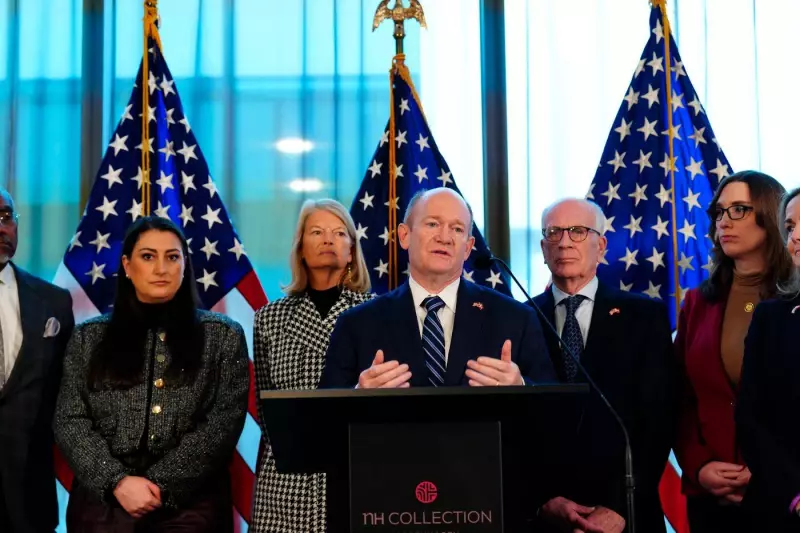
A high-level delegation from the United States Congress has concluded a diplomatic visit to Denmark and Greenland, aiming to reinforce strategic partnerships in the wake of provocative statements from former President Donald Trump.
Delegation Aims to Mend Fences
The bipartisan group, which included senators and members of the House of Representatives, held meetings in Copenhagen on Saturday, January 17, 2026. The visit was a direct response to recent threats made by Trump regarding the sovereignty and status of Greenland, a vast autonomous territory within the Kingdom of Denmark.
Led by Democratic Senator Chris Coons, the delegation sought to deliver a clear message of continued U.S. commitment to its longstanding alliances in the region. The lawmakers emphasized that the views expressed by the former president do not reflect the official position of the current U.S. administration or the consensus within Congress.

Focus on Arctic Security and Cooperation
The discussions in Copenhagen and subsequent talks with officials in Greenland focused heavily on Arctic security, climate change, and economic development. The Arctic region has gained immense strategic importance due to shifting climate patterns and increased geopolitical interest from global powers.
The American officials reiterated the value they place on Denmark and Greenland as crucial NATO allies and partners in maintaining stability in the North Atlantic. They discussed ongoing cooperation in areas such as scientific research, environmental protection, and resource management.
Addressing the Fallout from Political Rhetoric
The diplomatic mission underscores the challenges faced by U.S. allies when confronted with unpredictable political rhetoric from American figures. Trump's past comments, which included suggestions of purchasing Greenland, were widely seen as dismissive of Danish sovereignty and Greenland's right to self-determination.
By sending a congressional delegation, the United States aimed to provide tangible reassurance beyond official State Department channels. The presence of both Democratic and Republican members was intended to signal a bipartisan commitment to enduring transatlantic relationships, regardless of domestic political shifts.
The delegation's efforts highlight the ongoing work required to maintain diplomatic trust and navigate the complexities of international relations in a politically polarized era.