Thousands of people took to the streets across Denmark on Saturday, January 17, 2026, in a powerful show of solidarity with Greenland. The protests were a direct response to U.S. President Donald Trump's repeated threats to annex the Arctic island, with demonstrators demanding that the United States respect Greenlanders' right to determine their own future.
Widespread Demonstrations and Defiant Slogans
In Copenhagen, a large crowd gathered at City Hall Square before marching towards the U.S. embassy. Protesters chanted "Greenland is not for sale" and held banners with messages like "Hands off Greenland." The red and white "Erfalasorput" flag of Greenland was prominently displayed throughout the rallies. Organizers and police did not provide official crowd estimates, but Reuters video footage confirmed the presence of thousands.
Julie Rademacher, chair of Uagut, an organization for Greenlanders living in Denmark, expressed profound gratitude for the support. "I am very grateful for the huge support we as Greenlanders receive... we are also sending a message to the world that you all must wake up," she stated. Rademacher added that "Greenland and the Greenlanders have involuntarily become the front in the fight for democracy and human rights."

Unprecedented Diplomatic Crisis and Greenland's Stance
President Trump has justified his interest by citing Greenland's strategic location and vast mineral resources as vital to U.S. security, and he has not ruled out using force. These statements have triggered an unprecedented diplomatic crisis between the United States and Denmark, both founding NATO members, drawing widespread condemnation in Europe.
The protests, organized by Greenlandic groups and the NGO ActionAid Denmark, also occurred in other Danish cities and were scheduled for Nuuk, Greenland's capital. Camilla Siezing, chair of Inuit, the Joint Association of Greenlandic Local Associations in Denmark, clarified the demand: "We demand respect for the Danish Realm and for Greenland's right to self-determination."
Greenland, with a population of 57,000, has enjoyed significant autonomy since 1979 but remains part of the Kingdom of Denmark, which handles its defense and foreign policy. While all five parties in Greenland's parliament ultimately favour independence, they disagree on timing. In recent days, they have united in stating they would prefer to remain part of Denmark than join the United States.
Broader Context and Public Opinion
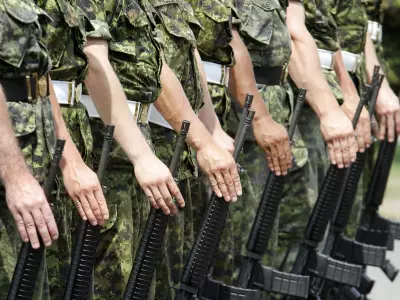
The geopolitical tension has escalated to the point where European nations sent military personnel to the island at Denmark's request earlier in the week. This move underscores the seriousness with which the threat is viewed.
Public opinion data adds another layer to the controversy. A Reuters/Ipsos poll found that only 17% of Americans approve of President Trump's efforts to acquire Greenland, with large majorities of both Democrats and Republicans opposing the use of military force for annexation. President Trump has dismissed these findings as "fake."
The demonstrations highlight a fierce commitment to sovereignty in the face of external pressure, emphasizing that the future of Greenland must be decided by its people and their existing constitutional partners, not by force or financial transaction.