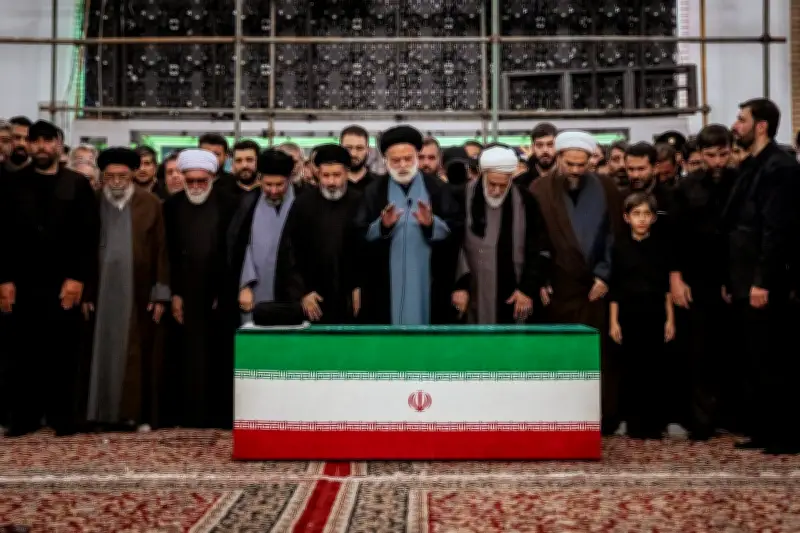
Iran's Supreme Leader has vowed revenge for the killing of his predecessor, escalating tensions in an already volatile region. The pledge comes after the death of the former leader, which has been attributed to enemy action. Military analyst John Spencer described the loss as 'a cognitive blow' to Iran's leadership, warning that it could risk spreading war throughout the Middle East.
Details of the Incident
The killing occurred under circumstances that have not been fully disclosed, but Iranian officials have blamed external forces. The Supreme Leader, speaking at a state funeral, declared that Iran would not rest until it avenges the death. 'This crime will not go unpunished,' he said, according to state media.
Regional Impact
The assassination has already sparked protests in Tehran and other cities, with crowds calling for retaliation. Neighboring countries have expressed concern that the conflict could spill over borders. Saudi Arabia and the United Arab Emirates have called for restraint, while Israel has remained silent. The United States has urged all parties to avoid escalation.

Analysts warn that Iran may use proxy forces in Syria, Iraq, and Yemen to strike back. 'Iran has multiple avenues for retaliation,' said John Spencer. 'The risk of miscalculation is high.'
International Reactions
The United Nations Security Council is expected to hold an emergency session to discuss the crisis. Russia and China have called for a diplomatic solution, while European nations have condemned the killing. 'We urge all sides to exercise maximum restraint,' a spokesperson for the European Union said.
Meanwhile, Iran's military has been placed on high alert, and its navy has conducted drills in the Strait of Hormuz, a critical chokepoint for global oil supplies. Oil prices have already risen 5% on the news.