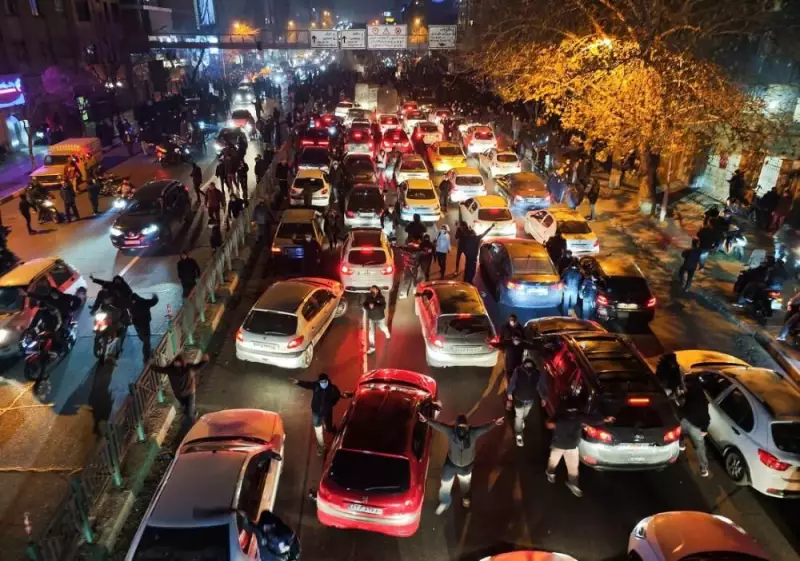
In a rare and significant admission, Iran's Supreme Leader Ayatollah Ali Khamenei has publicly acknowledged the deadly toll of recent nationwide protests, stating that 'several thousand people' were killed. This marks his first direct comment on the scale of the unrest that has shaken the Islamic Republic.
A Landmark Admission and Accusations
Speaking during a televised address on Saturday, January 17, 2026, Khamenei confirmed the heavy human cost of the demonstrations that began in late December. He stated that some of those killed died 'brutally and inhumanely,' though he did not provide specific details. In a move that deflects blame from state authorities, the Supreme Leader accused the United States and Israel of aiding in the killings, claiming the Islamic Republic possesses evidence to support this allegation.
Khamenei also singled out former U.S. President Donald Trump, holding him culpable for 'deaths, damage, and accusations he has inflicted on the Iranian people.' He framed Washington's broader policy goal as an attempt to place Iran under military, political, and economic domination. Despite the heightened tensions, Khamenei asserted that Iran does not seek war but vowed that neither domestic nor international 'criminals' would go unpunished.

Scale of the Crackdown and Communication Blackout
The death toll cited by Khamenei aligns with estimates from international human rights groups, which had previously suggested approximately 3,500 fatalities. These organizations also estimate that more than 22,000 people have been detained by authorities during the crackdown.
The protests have occurred against the backdrop of a record-long, near-total internet blackout affecting Iran's population of roughly 92 million people. The government initiated the shutdown of internet and mobile services on January 8 in an effort to quell the unrest, which was sparked by a severe currency crisis.
On Saturday, semi-official news agencies Mehr and Fars reported partial and gradual restorations of connectivity, including mobile text messages. However, the internet monitoring group NetBlocks indicated that overall access remained at a mere 2% of normal levels, with no sign of a significant return. Platforms like Telegram, Instagram, and X (formerly Twitter) showed minimal activity from users within Iran, who typically rely on VPNs to bypass restrictions.
A Familiar Tool of Control
This communications blackout has now surpassed the duration of the shutdown imposed during the 2019 protests, according to NetBlocks. Near-total blackouts have become a standard tactic for Iranian authorities during periods of crisis, effectively cutting off most citizens from the global internet and funneling them onto a tightly controlled domestic network.
Fars news agency cited unnamed officials stating that while services were being slowly restored, some restrictions would remain in place 'as long as security conditions require.' This ongoing information vacuum has made independent verification of events on the ground extremely difficult, underscoring the challenges faced by both protesters and external observers.