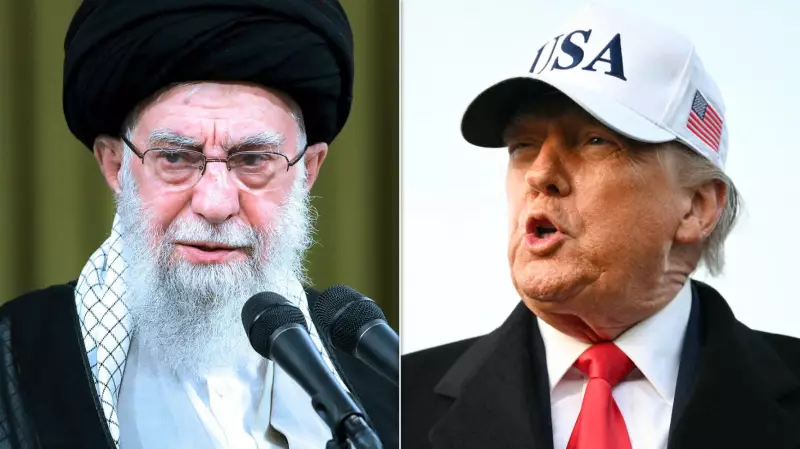
Iran's Supreme Leader Ayatollah Ali Khamenei delivered a scathing rebuke of the United States on Saturday, directly labelling President Donald Trump a "criminal" for his support of anti-government demonstrators in Iran. In a nationally televised speech, Khamenei also provided a rare and grim official indication of the protest death toll, stating the unrest had left "several thousand" people dead.
A Leader's Accusation and a Revealing Death Toll
The speech, broadcast by Iranian state television, marked the first time a senior Iranian leader has acknowledged the scale of casualties resulting from the wave of protests that began on December 28. The demonstrations, initially sparked by economic grievances, were met with a severe security crackdown.
Khamenei, who holds ultimate authority over Iranian state matters, placed the blame squarely on the protesters and their foreign backers. "We do consider the U.S. president a criminal, because of casualties and damages, because of accusations against the Iranian nation," he declared. He accused the demonstrators of being "foot soldiers" for the United States and claimed they had destroyed mosques and educational centers.

His allegation that "several thousand" had been killed aligns more closely with external estimates than previous official statements. The U.S.-based Human Rights Activists News Agency has reported a death toll of at least 3,090 from the crackdown, a figure that would represent the deadliest period of unrest in Iran in decades.
Trump's Mixed Signals and Khamenei's Retort
Khamenei's fiery comments came just a day after President Trump struck a surprisingly conciliatory note. Trump stated that "Iran canceled the hanging of over 800 people," adding, "I greatly respect the fact that they canceled." He did not specify his source for this information within Iran. This shift in rhetoric was seen by analysts as a potential step back from earlier threats of military action.
However, in the days prior, Trump had explicitly told Iranian protesters that "help is on the way" and warned that his administration would "act accordingly" if killings continued or detained protesters were executed. It was these earlier remarks that Khamenei seized upon in his speech.
"In this revolt, the U.S. president made remarks in person, encouraged seditious people to go ahead and said: 'We do support you, we do support you militarily,'" Khamenei asserted. He reiterated long-standing Iranian accusations that Washington seeks domination over Iran's economic and political resources.
An Uneasy Calm and Digital Blackout
Following the harsh repression, Tehran and other cities have returned to an uneasy calm. Street life and shopping appear normal on the surface, and state media has not reported new unrest for days. The crackdown included a near-total internet blackout imposed on January 8, severely restricting communication and information flow.
On Saturday, witnesses reported that text messaging and very limited internet access were briefly restored in parts of the country. Some users could access local websites, and a few reported limited international connectivity through VPNs. Internet monitoring groups like Cloudflare and NetBlocks confirmed slight increases in connectivity, while Iran's Mehr news agency also reported limited access without explanation.
The restoration, however limited and temporary, may have been a pragmatic move by authorities, as the prolonged outage has crippled businesses and banking transactions. Meanwhile, a call for renewed protests from Saturday to Monday by Reza Pahlavi, Iran's exiled crown prince, appeared to have gained little traction within the country by Saturday afternoon.
The situation remains tense and volatile. While the streets are quiet, the Supreme Leader's admission of a heavy death toll and his direct condemnation of the American president underscore the profound domestic and international tensions that continue to simmer beneath Iran's fragile surface.