Iranian Uprising Creates Historic Opening as Regime Faces Unprecedented Pressure
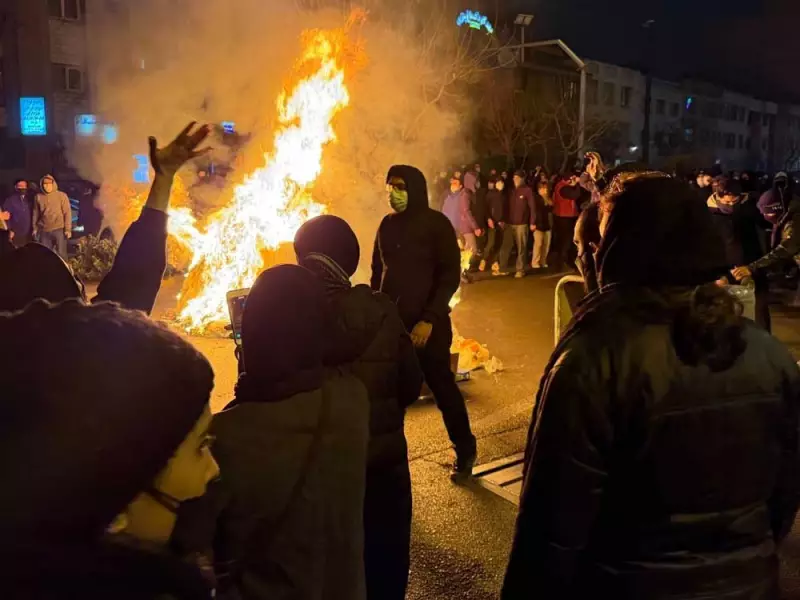
The massive street demonstrations currently unfolding across Iran have created what analysts describe as a historic opening, one that could potentially end the Islamic Republic's longstanding nuclear and missile challenges while fundamentally reshaping a regional security order that has been defined for decades by coercion and persistent threats.
Four Decades of Regional Instability
For over forty years, the Islamic Republic has served as a primary source of instability throughout West Asia and beyond, engaging in repeated confrontations with both Israel and the United States. Through sustained financial and military support for armed non-state actors including Hezbollah and Hamas, coupled with the systematic export of violence and ideological extremism, the regime has consistently undermined both regional and global security frameworks.
The current nationwide uprising represents not merely a struggle for political freedom within Iran's borders, but a moment of significant consequence for the entire international system. The world now confronts a brutal state whose survival strategy has long depended on domestic repression paired with deliberate disruption abroad.

Transnational Networks and Democratic Challenges
As a former Iranian student leader and political prisoner who has spent years in Canada advocating for human rights, I have long warned that the Islamic Republic's reliance on violence would not remain confined within Iran's borders. The regime has actively cultivated extensive transnational networks, advanced proxy forces across multiple regions, and sought to influence political discourse in democratic nations including the United States, Canada, and Europe through intimidation, foreign interference, and indirect pressure tactics.
This sustained campaign has posed a continuous challenge not only to the Iranian people but to democratic societies worldwide, testing the resilience of international norms and legal frameworks.
International Response and Regime Vulnerability
Several prominent U.S. policymakers, including Senators Ted Cruz and Lindsey Graham, have argued that the current moment represents a rare strategic opportunity to confront the Islamic Republic decisively. Inside Iran, protesters have gone further in their demands, openly chanting the name of U.S. President Donald Trump while calling for direct international intervention. These calls have been echoed by Iranian diaspora communities and international observers across the globe.
Simultaneously, in a significant policy reversal that reflects growing vulnerability as domestic control erodes, the Islamic Republic has itself reached out to the Trump administration seeking negotiations. This marks a dramatic shift after years of publicly rejecting talks with Washington as fundamentally illegitimate.
Legal Thresholds and International Responsibility
President Trump has stated clearly that the use of lethal force against protesters would trigger serious consequences, describing Supreme Leader Ali Khamenei as a major threat to U.S., Israeli, and broader Middle Eastern security. While pledging support for Iranian protesters, the administration has not yet met with Prince Reza Pahlavi, whom many demonstrators regard as a potential representative voice for transitional alternatives.
These evolving political dynamics underscore a broader reality: the regime's internal crisis is now directly intersecting with complex international power calculations in unprecedented ways.
Crimes Against Humanity and Legal Accountability
What is currently unfolding inside Iran—widespread and systematic attacks against unarmed civilian populations—meets the established legal threshold for crimes against humanity under international law. Such acts do not merely provoke moral condemnation; they trigger specific legal responsibilities and accountability mechanisms that the international community must address.
The sustained pressure from both street protests and international scrutiny creates a pivotal moment that could potentially reshape not only Iran's political future but the broader security architecture of an entire region that has endured decades of instability and threat.