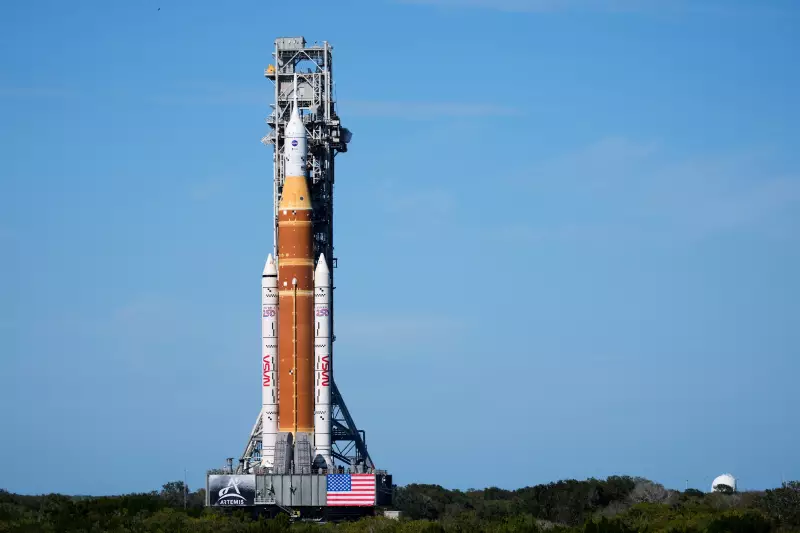
In a major milestone for lunar exploration, NASA has moved its powerful new moon rocket to the launch pad, setting the stage for the upcoming Artemis II mission. The massive Space Launch System (SLS) rocket and Orion spacecraft began their slow, hours-long journey from the Vehicle Assembly Building to Launch Pad 39B at Florida's Kennedy Space Center on Saturday, January 17, 2026.
A Critical Step Toward Lunar Return
The rollout represents a pivotal moment in NASA's ambitious plan to return humans to the lunar surface. The Artemis II mission is designed to carry a crew of astronauts on a journey around the moon and back, testing all systems in deep space before future missions attempt a landing. This wet dress rehearsal on the pad allows engineers to conduct final checks and simulations with the fully stacked rocket in its launch configuration.
The spectacle of the 322-foot-tall rocket crawling atop NASA's giant Crawler-Transporter 2 is a sight not seen since the Apollo era. The journey to the pad, covering roughly four miles, is a meticulous process where the crawler moves at a top speed of just one mile per hour to ensure the precious payload's stability.

Preparing for a Historic Crewed Flight
Artemis II is slated to be the first crewed mission of the Artemis program, following the successful uncrewed Artemis I test flight. While the exact launch date is still being finalized, the move to the pad indicates that pre-launch operations are entering their final phases. At the pad, teams will work through a series of tests, including powering up the rocket and spacecraft and loading propellants during a practice countdown.
The mission will see astronauts venture farther from Earth than any humans have traveled since the Apollo 17 mission in 1972. The crew will not land on the moon but will instead loop around it, validating life support, communication, and navigation systems in the deep space environment. This mission paves the way for Artemis III, which aims to land the first woman and the next man on the lunar surface.
The Broader Artemis Vision
NASA's Artemis program represents a new chapter in space exploration, aiming to establish a sustainable human presence on the moon by the end of the decade. The lessons learned are crucial for the ultimate goal of sending astronauts to Mars. The SLS rocket, the most powerful ever built by NASA, is the cornerstone of this endeavour, providing the thrust needed to send the Orion capsule and its crew on their trans-lunar trajectory.
The rollout on January 17 marks the beginning of the final pre-launch campaign for this historic flight. All eyes will now be on Pad 39B at the Kennedy Space Center as NASA prepares to write the next page in the story of human space exploration.