Canada Backs U.S. Action on Iran but Rules Out Military Involvement
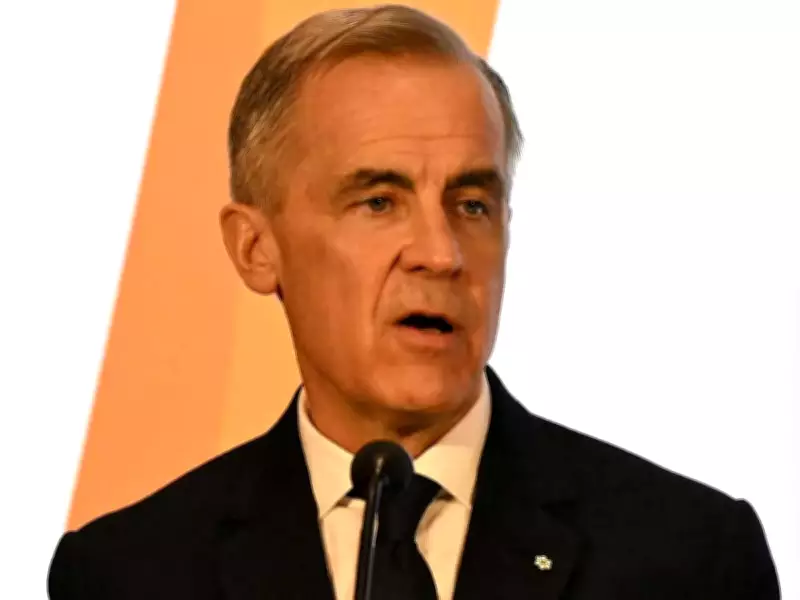
Prime Minister Mark Carney has declared that Canada supports the United States' actions in Iran aimed at preventing the country from obtaining nuclear weapons and threatening international security. However, he emphasized that Canada will not be involved militarily in the escalating conflict.
Carney's Statement in Mumbai
During a speech at the Canada-India Growth and Investment Forum in Mumbai on Saturday, Carney addressed the joint U.S.-Israeli attack that resulted in the death of Iran's Supreme Leader Ayatollah Ali Khamenei. "Canada supports the United States acting to prevent Iran from obtaining a nuclear weapon and to prevent its regime from threatening international peace and security," Carney stated while on a four-day trade mission in India.
When questioned by reporters about potential Canadian involvement, the prime minister clarified, "We have not been party to the military buildup to this or the military planning of this. So it is not envisioned that we would be part of it moving forward."

Official Government Position
In an earlier joint statement with Foreign Affairs Minister Anita Anand, Carney reiterated that Canada has consistently called for Iran to end its nuclear program, asserting that the Islamic Republic "must never be allowed to obtain or develop nuclear weapons." The statement noted that despite diplomatic efforts, Iran has failed to dismantle its nuclear activities or cease support for regional terrorist groups.
The government also urged all parties to protect civilian lives and committed to taking all possible measures to safeguard Canadian nationals and diplomatic missions in the region.
Security Concerns and Travel Disruptions
The Canadian Association of Chiefs of Police has advised citizens to remain vigilant, although no specific threats have been identified. "Experience shows that periods of geopolitical tension can sometimes inspire extremist networks, hate-motivated individuals or proxy-related threat actors to exploit these situations to incite hate-fuelled violence," the association warned via The Canadian Press.
The conflict has severely disrupted air travel across the Middle East, with hundreds of thousands of travelers stranded. Key developments include:
- Air Canada has canceled flights to Tel Aviv until March 8 and to Dubai until Tuesday, advising passengers not to proceed to airports.
- Pearson International Airport reported delays and cancellations due to widespread airspace closures.
- Airports and airspace in Israel, Qatar, Syria, Iran, Iraq, Kuwait, Bahrain, Oman, and the United Arab Emirates have been shut down.
- Casualties have been reported at airports in Dubai and Abu Dhabi due to drone strikes.
Travel Warnings Issued
Canada has issued travel advisories, warning against all travel to Lebanon, Israel, Gaza, the West Bank, Iraq, Qatar, Bahrain, the United Arab Emirates, Kuwait, Iran, Syria, and Yemen. Non-essential travel is also discouraged to Oman, Saudi Arabia, and Jordan.
The U.S. and Israel launched a major attack on Iran on Saturday, leading to Khamenei's death. Iran has retaliated with missile and drone attacks on Israel and nearby Arab Gulf countries hosting U.S. forces, intensifying regional instability.