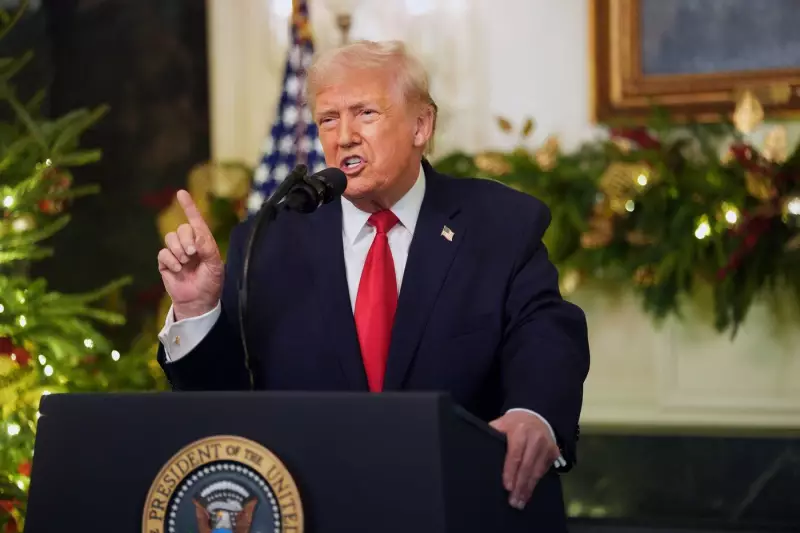
President Donald Trump used a prime-time national address to make a series of verifiably false statements, according to a detailed fact-check by CNN. The speech was delivered from the Diplomatic Reception Room at the White House on the evening of Wednesday, December 17, 2025.
Address from the Diplomatic Reception Room
The President spoke to the nation from a familiar setting, the Diplomatic Reception Room. The event was documented by photographer Doug Mills of The New York Times, with images distributed via the Associated Press pool. While the content of the address covered multiple topics of national importance, the factual accuracy of several key assertions did not hold up under scrutiny.
Pattern of Inaccurate Statements
The CNN analysis, published on the morning of Thursday, December 18, 2025, systematically reviewed the claims made during the broadcast. The fact-checkers identified numerous instances where the President's statements contradicted established public records, official data, or his own previous documented actions. This pattern of presenting misinformation in a formal, televised setting has raised concerns among media watchdog groups and political analysts about public discourse.

Such addresses are traditionally reserved for moments of national crisis or major policy announcements, granting the speaker a significant audience and a mantle of authority. The integration of false claims within this context presents a unique challenge for journalists and fact-checking organizations tasked with providing accurate information to the public in real-time.
The Broader Media Landscape
The fact-check article was published amidst a wide array of other national and regional news stories in Canada, highlighting the constant flow of information audiences navigate. These concurrent headlines ranged from severe weather events and economic reports to human interest stories, illustrating the competitive media environment where verification is crucial.
The repetition of previously debunked claims is a noted tactic in political communication, often intended to reinforce a narrative regardless of its basis in fact. Experts in political science and media studies note that correcting misinformation after it has been delivered to a mass audience is an uphill battle, as the initial message often leaves a lasting impression.
This event underscores the ongoing role of independent journalistic fact-checking in democratic societies. By holding statements from powerful figures up to evidentiary scrutiny, news organizations aim to provide citizens with the context needed to form informed opinions, a function considered essential for healthy civic engagement.