Tourette Syndrome Incident at BAFTA Awards Ignites National Conversation
The British Academy Film Awards ceremony became the center of a heated international debate this week after John Davidson, a Tourette syndrome activist whose life inspired the BAFTA-nominated film "I Swear," experienced an uncontrollable verbal tic during the broadcast. The incident has raised profound questions about neurological disorders, racial sensitivity, and media responsibility.
The Controversial Outburst
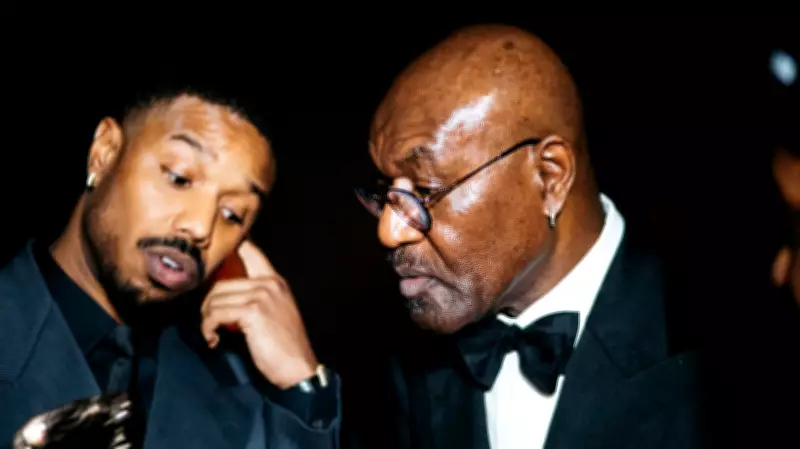
During the BBC-aired ceremony, Davidson shouted expletives including "Shut the fuck up" and "fuck you" at various moments. However, the moment that sparked particular outrage occurred when Davidson yelled the N-word at actors Michael B. Jordan and Delroy Lindo as they presented an award. Both actors are Black, and the racial slur reverberated through the broadcast, creating immediate controversy.
Davidson later released a statement expressing deep mortification, emphasizing that his "involuntary tics" were not intentional and carried no personal meaning. The incident has nevertheless opened a complex dialogue about where neurological conditions intersect with societal racism.

Understanding Tourette Syndrome
Tourette syndrome is a neurological disorder characterized by both verbal and physical tics that range from mild to severe. According to the Cleveland Clinic, the condition affects approximately 1 in 160 children in the United States, typically emerging around age six, with higher prevalence among males than females.
Dr. Adjoa Smalls-Mantey, an emergency psychiatrist and president of the New York County Psychiatric Society, explains that tics manifest in two primary forms: motor tics involving physical movements like blinking or shoulder shrugging, and vocal tics that can include throat-clearing, grunting, or more severe outbursts known as coprolalia—the involuntary shouting of obscene or derogatory words.
"From our understanding of the disease, and we really don't understand a lot, it is a neurological disease—it's a disease of lack of impulse control," Smalls-Mantey stated. She emphasized that such outbursts don't necessarily reflect an individual's beliefs or values.
The Stress Factor in Tic Disorders
High-stress environments can significantly exacerbate tic disorders, particularly coprolalia. The BAFTA ceremony—with its bright lights, celebrity encounters, and intense public attention—created precisely the kind of overwhelming situation that can trigger severe tics.
"During those times...you're worried about something, all these things come to mind, then you can't even suppress the way the normal person can," Smalls-Mantey explained. For individuals with Tourette's, such environments can overwhelm neurological coping mechanisms.
Treatment Options and Limitations
While no cure exists for Tourette syndrome, various treatments can help manage symptoms. Kate Hanselman, a board-certified psychiatric mental health nurse practitioner with Thriveworks, notes that "Tourette's can be challenging to treat because it is a neurological impulse." Available options include behavioral therapies and medications, though results vary significantly between individuals.
"The thing to be aware of is it's not like you can just take this one medication, take a pill, and then it'll completely suppress all of your tics and urges forever," Smalls-Mantey cautioned. She advocates for comprehensive treatment approaches while acknowledging their limitations.
Institutional Response and Racial Implications
The aftermath of the incident has raised serious questions about institutional responsibility. The BBC stated that producers "didn't hear" the racial slur during broadcast, while BAFTA issued a general apology that many critics found insufficient. Notably, host Alan Cumming's on-air apology was widely criticized as inadequate.
Delroy Lindo revealed that neither he nor Michael B. Jordan received immediate outreach following the incident. Smalls-Mantey observed that the institutional response "shows a lack of cultural sensitivity and regard for the trauma of Black people and how we might feel around such a hurtful word being said."

The psychiatrist highlighted the problematic nature of apologies that use conditional language like "sorry if anyone was offended" rather than directly acknowledging the harm caused by racial slurs.
The Complex Intersection of Mental Health and Racism
This incident has exposed difficult questions about how society responds to offensive language when it originates from neurological conditions. Smalls-Mantey, drawing from her emergency psychiatry experience, noted that patients in manic episodes have directed racial slurs toward her, including the N-word and other derogatory terms.
"I know they are sick but it still stings, and it wears on you to know that society's racist views have imprinted on someone to the extent that these hateful sentiments, whether true beliefs or not, are deep within someone so that when they are disinhibited by a mental illness, they come out," she reflected.
The psychiatrist also raised questions about who receives compassion versus accountability in such situations: "Some people are given more grace and deference. And their mental illness is enough to extend grace, but grace is not extended to others who are also suffering with a mental illness, and I wonder if that is partially because of their racial background."
Broader Societal Implications
Beyond the immediate controversy, this incident has highlighted how racial slurs retain traumatic power regardless of their origin. "Any Black person that hears that would, of course, freeze, it's just instantly triggering because of the history of how loaded that word is," Smalls-Mantey emphasized.
Many social media commentators have noted the disparity between the understanding extended to Davidson and the expectations placed on the Black community to accept apologies without adequate acknowledgment of trauma.
Smalls-Mantey hopes this incident will spur two important developments: increased funding for Tourette syndrome research and treatment, and greater societal awareness about racial sensitivity and institutional responsibility. "We have to remember to protect all groups in society. Everyone's worthy of that protection," she concluded.
The BAFTA incident has thus become a multifaceted case study in how neurological disorders, media practices, and racial dynamics intersect in contemporary society, challenging institutions and individuals alike to navigate these complex intersections with greater sensitivity and understanding.