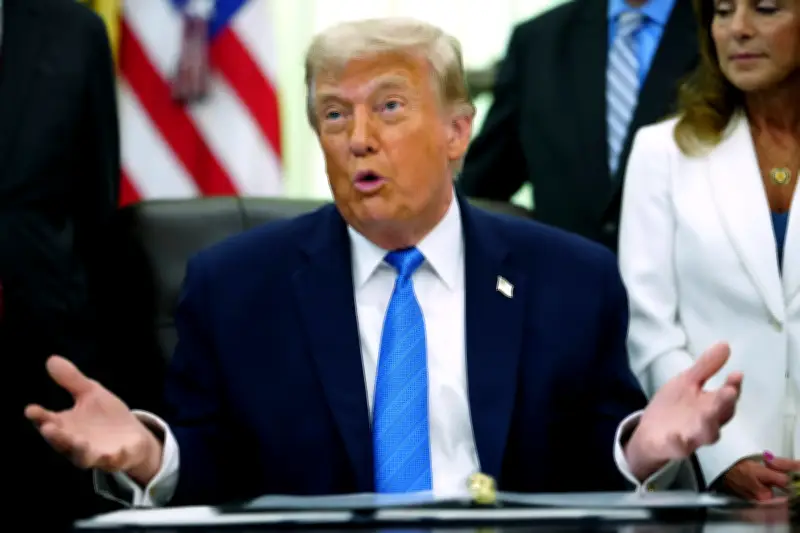
President Donald Trump declared on Wednesday that he is 'not looking to renew' the North American free trade deal, a statement that has significant implications for trade relations between the United States, Canada, and Mexico. Speaking from the Oval Office, Trump emphasized his administration's focus on renegotiating terms that favor American workers and industries.
Background and Context
The current trade agreement, known as the United States-Mexico-Canada Agreement (USMCA), replaced the earlier North American Free Trade Agreement (NAFTA) in 2020. However, Trump's remarks suggest a potential shift in policy, as he aims to address ongoing concerns about trade imbalances and job outsourcing.
Reactions from Canada and Mexico
Canadian officials, including Prime Minister Justin Trudeau and Finance Minister Chrystia Freeland, have expressed cautious optimism about future negotiations. Bank of Canada Governor Carney is set to chair a virtual meeting with premiers to discuss the upcoming CUSMA talks. Meanwhile, Mexico has yet to issue an official response, but analysts predict a robust defense of the trilateral framework.

Economic Implications
Trade experts warn that terminating the agreement could disrupt supply chains and increase costs for consumers. The automotive industry, in particular, relies heavily on integrated North American production. Honda recently recalled over 880,000 cars due to rear suspension issues, highlighting the interconnected nature of manufacturing.
Political Fallout
Trump's stance has drawn criticism from Democrats and some Republicans who argue that trade deals boost economic growth. The statement also comes amid heightened tensions over immigration and security policies, including a proposed H-1B visa fee increase.
Future Outlook
As negotiations loom, stakeholders are bracing for uncertainty. The White House has not provided a timeline for formal talks, but Trump's remarks signal a hardline approach. Observers will be watching closely for any developments in the coming weeks.