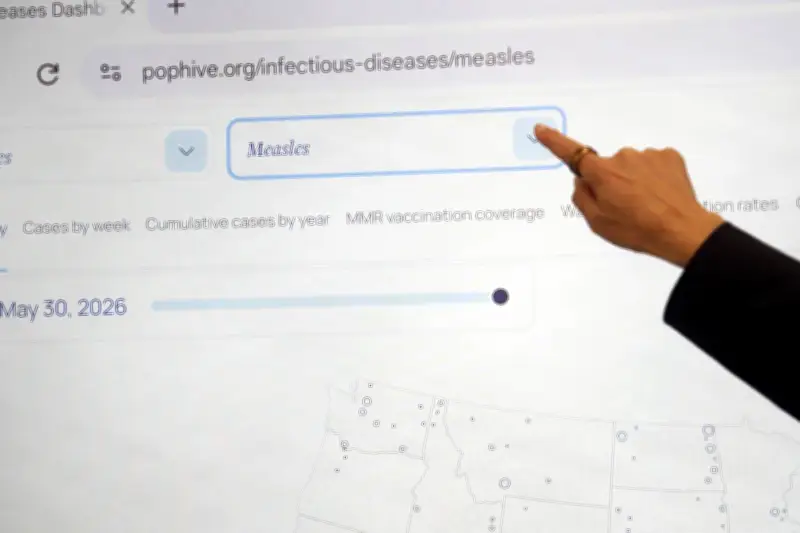
Health officials are closely monitoring potential disease threats during the World Cup, with Georgetown University's Rebecca Katz leading efforts to track outbreaks. At the Health Security Operations Center in Washington on June 3, 2026, Katz highlighted measles data for the country, emphasizing the importance of vigilance during large international gatherings.
Surveillance Operations
The Health Security Operations Center, based at Georgetown University, serves as a hub for detecting and responding to public health risks. Katz and her team analyze real-time data to identify emerging threats, such as measles, which can spread rapidly in crowded settings. The World Cup, attracting millions of visitors, presents unique challenges for disease control.
Key Focus Areas
- Measles outbreaks: Monitoring vaccination coverage and case reports.
- International travel: Tracking movements of infected individuals.
- Coordination: Collaborating with global health agencies.
Katz stressed that early detection is crucial to preventing widespread transmission. The center uses advanced analytics to predict potential hotspots and deploy resources efficiently.

Broader Health Context
This surveillance comes amid other health developments, including Canada's launch of a new preventive health advisory committee and a milk recall at Costco Canada. Additionally, a new study examines the mental health impacts of working from home.
The World Cup health monitoring effort underscores the ongoing need for robust public health infrastructure to safeguard global events.