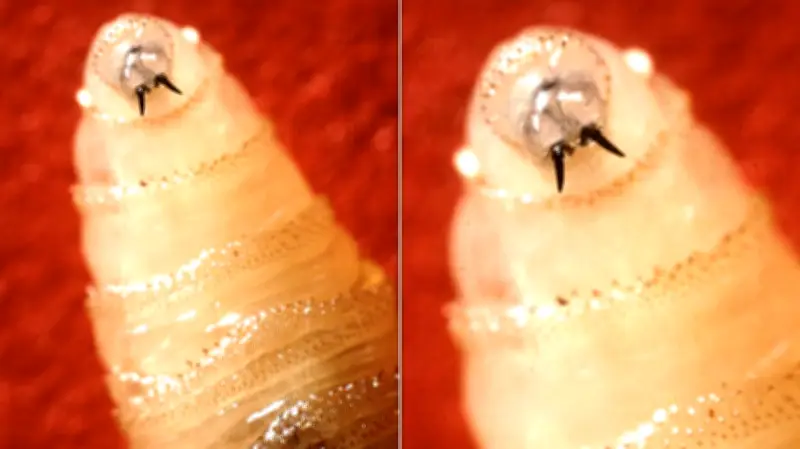
The natural world contains many unsettling phenomena, and the New World screwworm (NWS), often called the "flesh-eating screwworm," is one of them. This parasitic fly larva has recently made headlines after agricultural authorities in South Texas established a quarantine zone following a confirmed case in a calf. While the screwworm poses a genuine threat to the cattle industry, many people are concerned about whether it could target humans as well.
What Is the New World Screwworm?
According to Lori Ferrins, an associate professor of pharmaceutical sciences at Northeastern University who studies neglected parasitic diseases, the New World screwworm is the larval stage of a parasitic fly. The name "screwworm" derives from the larvae's distinctive feeding behavior. "Once the fly lands and lays its eggs in an open sore or wound on an animal like a calf, the larvae hatch and burrow into the flesh in a screw-like motion," Ferrins explained to HuffPost. These larvae feed exclusively on the living tissue of warm-blooded animals, making cattle, deer, and other mammals potential hosts.
Quarantine Measures and Risks
The recent case involved a three-week-old calf near the Mexico border, marking the first such occurrence in Texas since 1966. Agriculture Secretary Brooke Rollins assured the public that there is "no threat of mass infestation" and emphasized that the larvae do not infest food. Animals and humans who receive proper treatment can recover from these painful infections. However, ranchers and cattle industry leaders are concerned about the economic impact, as previous infestations caused significant financial losses before the fly was eradicated in the 1970s.

Human Transmission Risks
Ferrins stressed that human transmission is highly unlikely under normal circumstances. "A fly must actually land on you and lay eggs in an open wound," she clarified. There is no direct animal-to-person or animal-to-animal transmission. As long as infected animals are quarantined, the risk to humans and pets remains minimal. A previous human case in 2025 involved a traveler who contracted the infection in Central America, not locally.
Preventive Measures
People in affected areas can protect themselves by covering sores, wearing long sleeves and long pants, and minimizing exposed skin. These simple steps prevent flies from landing and laying eggs. While the name "screwworm" naturally causes alarm, Ferrins noted that the actual risk to humans is very low, and awareness is key to preventing any spread.