In a significant development in the ongoing Iran conflict, U.S. President Donald Trump has declared that Iran has formally requested a ceasefire deal, which the United States is actively considering accepting. This announcement, reported by Fox News on Wednesday, comes with a critical condition: the reopening of the strategically vital Strait of Hormuz, a key global oil shipping route.
Trump's Address and Iranian Denials
President Trump is scheduled to deliver a primetime presidential address at 9 p.m. ET, where he is expected to elaborate on the ceasefire proposal. His statement follows earlier remarks suggesting that the U.S. military could conclude its offensive operations in Iran by the end of the month, shifting responsibility to other nations dependent on the Strait of Hormuz for oil transport. Trump has notably urged reluctant allies to "go get your own oil" if they are unwilling to support American war efforts more substantially.
However, Iranian Foreign Minister Abbas Araghchi has firmly contradicted Trump's claims, insisting that no direct negotiations with the U.S. have taken place. In an interview with Al Jazeera, Araghchi expressed deep skepticism, stating, "We do not have any faith that negotiations with the U.S. will yield any results. The trust level is at zero." He acknowledged receiving messages from U.S. Mideast envoy Steve Witkoff but clarified these were not part of official diplomatic talks.

Escalating Military Actions and Regional Fallout
Despite the ceasefire discussions, military hostilities have intensified across the region. Iran's supreme leader, Ayatollah Mojtaba Khamenei, who has not been publicly seen since the war began and is believed by U.S. and Israeli officials to be wounded, has pledged continued support for anti-Israeli forces in the Middle East. In a message relayed on state television, he affirmed Iran's commitment to "supporting the resistance against the Zionist-American enemy."
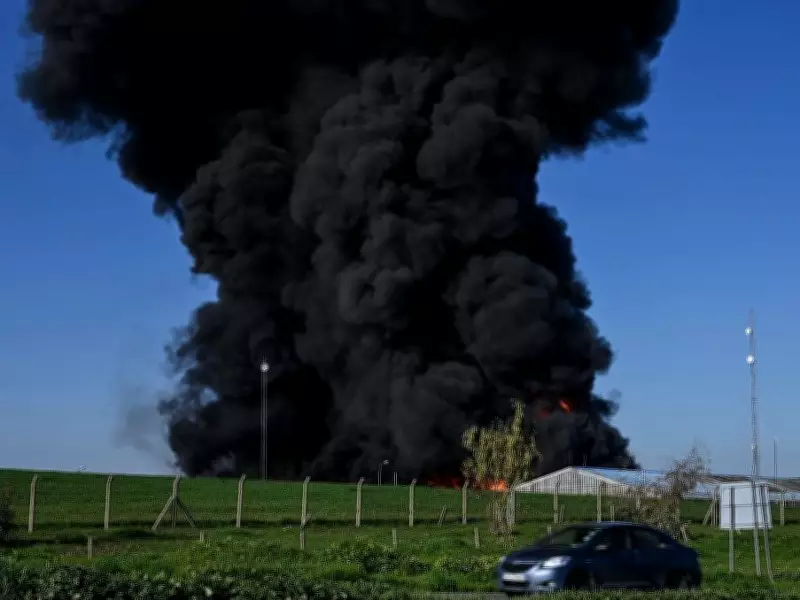
Recent attacks include an Iranian drone strike that ignited a large fire at a fuel tank at Kuwait International Airport, though no injuries were reported. Additionally, Israel targeted a factory in Iran, claiming it supplied fentanyl for chemical weapons, while Iran maintained the facility produced only medical drugs. Multiple drone attacks also hit a fuel warehouse in northern Iraq, operated by Castrol, a BP subsidiary, with no casualties.
Global Economic and Diplomatic Repercussions
The conflict has triggered significant economic shifts, with oil prices falling below $100 per barrel as optimism about de-escalation grew. Brent crude dropped 4.7% to $99.05 per barrel, and U.S. crude declined 4% to $97.33. Asian shares rallied in response, but analysts warn that prolonged warfare could lead to soaring grocery prices due to increased transportation and packaging costs.
In response to the crisis, Australian Prime Minister Anthony Albanese has urged citizens to use public transport to conserve fuel, anticipating difficult months ahead. South Korea has implemented a limited car policy for public employees, requiring alternate-day use starting next week, amid concerns over crude oil supplies.
Diplomatically, U.K. Prime Minister Keir Starmer reaffirmed Britain's commitment to NATO, calling it "the single most effective military alliance the world has ever seen," following Trump's criticisms. The U.K. will host an international conference this week to address maritime security in the Strait of Hormuz.
Ongoing Hostilities and Humanitarian Impact
Further military actions include an Iranian cruise missile strike on an oil tanker contracted to Qatar, with the crew evacuated safely and no environmental damage reported. The Iranian-backed Houthis in Yemen fired ballistic missiles toward southern Israel, triggering air raid sirens, though no impacts were immediately confirmed. This marks their third attack since joining the conflict, raising fears of renewed disruptions in Red Sea shipping.
In Lebanon, the military has withdrawn from some border towns as Israeli troops advance, though forces remain in Christian-majority communities like Rmeich and Ain Ebel after resident appeals. Over one million people in Lebanon have been displaced in the past month, highlighting the severe humanitarian toll of the war.

As tensions persist, the world watches closely, with the potential for ceasefire talks offering a glimmer of hope amid widespread destruction and economic uncertainty.