Experts Warn: Forcibly Securing Iran's Enriched Uranium Poses High Risk and Complexity
Military analysts and nuclear security specialists are issuing stark warnings about the potential consequences of attempting to secure Iran's enriched uranium stockpiles through forceful means. According to their assessments, such an operation would be exceptionally hazardous and logistically intricate, with the potential to trigger significant regional instability.
The Operational Challenges
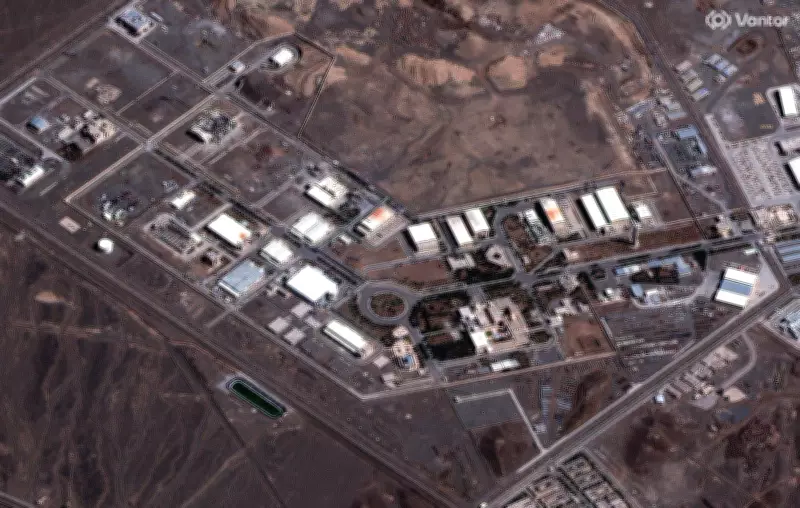
The primary obstacle lies in the fortified nature of Iran's nuclear facilities. Sites like the Natanz enrichment complex are heavily defended, often located underground or within hardened structures designed to withstand aerial attacks. A satellite image from March 2026, provided by Vantor, showed the Natanz facility with no visible new damage, highlighting its resilience. Any military action would require:
- Precise intelligence on the exact locations and security measures of uranium storage.
- Specialized forces capable of navigating fortified and potentially contaminated environments.
- Rapid extraction and containment protocols to prevent dispersal of radioactive material.
Experts emphasize that the window for a successful, contained operation is extremely narrow, increasing the likelihood of a prolonged and violent confrontation.

Geopolitical and Security Ramifications
Beyond the immediate tactical difficulties, the geopolitical fallout could be severe. An unprovoked seizure of nuclear materials would likely be viewed as an act of war by Iran, potentially drawing other regional actors into the conflict. It could also:
- Undermine existing diplomatic frameworks and non-proliferation treaties.
- Incentivize Iran to accelerate its nuclear program in more secretive or dispersed locations.
- Destabilize global energy markets and security alliances.
The consensus among analysts is that the risks of escalation far outweigh any perceived security benefits from forcibly removing the material.
Alternative Pathways Forward
Given the high stakes, experts are urging a renewed focus on diplomatic and verification mechanisms. Strengthening international monitoring, such as through the International Atomic Energy Agency (IAEA), and reviving negotiated agreements are cited as more sustainable approaches to managing Iran's nuclear capabilities. These methods aim to ensure transparency and compliance without resorting to military action that could have catastrophic and unpredictable consequences.
The debate underscores the complex balance between non-proliferation efforts and the avoidance of conflict in one of the world's most volatile regions.