

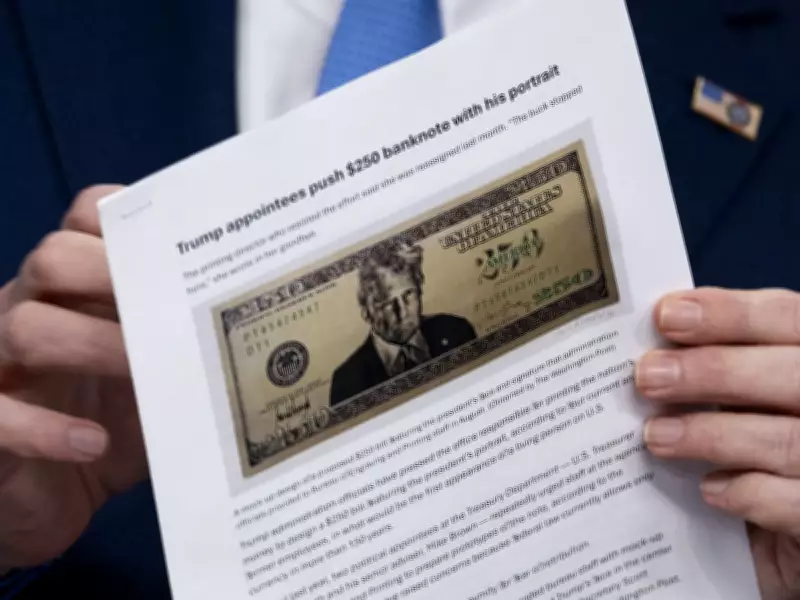
The proposal to place President Donald Trump's face on a new US$250 bill has ignited significant controversy, drawing criticism from opponents who argue that his name and likeness are already ubiquitous across Washington D.C.
The Origin of the Controversial Bill
U.S. Treasury Secretary Scott Bessent recently displayed a mock-up of the bill featuring Trump's latest official portrait during a press conference. The initiative is part of the 250th anniversary celebrations of the United States' confederation, but it has raised legal and ethical questions.
Legal Hurdles for the Trump Bill
Current U.S. Treasury mandates prohibit featuring living individuals on new currency and require the inclusion of the phrase 'In God We Trust.' Legislation introduced by Representative Joe Wilson of South Carolina seeks to amend the living person restriction, but it has been stalled in the House Financial Services Committee since 2025. Bessent stated he is prepared to issue the bill once the law changes, and a Treasury spokesperson confirmed active planning for production.

Design and Public Reaction
While official designs remain undisclosed, the Bureau of Engraving and Printing has drafted early mock-ups. Critics, including House Minority Leader Hakeem Jeffries, have denounced the bill as a 'hard no,' calling it a distraction from pressing issues like high gas prices and living costs. Supporters, however, view it as a unifying tribute to the nation's 250th birthday.
Trump's Signature and Other Branding
In March, the Treasury added Trump's signature to paper currency for the first time for a sitting president, also tied to the anniversary. Additionally, Trump's image appears on commemorative gold coins. His allies have also placed his name on a discount drug platform, children's savings accounts, and a new class of battleships.
Broader Implications
The debate over the Trump $250 bill reflects larger concerns about the administration's priorities and the blending of personal branding with national symbols. As Bessent noted, 'I don't think there's anything untoward about having the president of the United States on the 250th anniversary bill.' Yet the controversy persists, highlighting deep political divisions.






