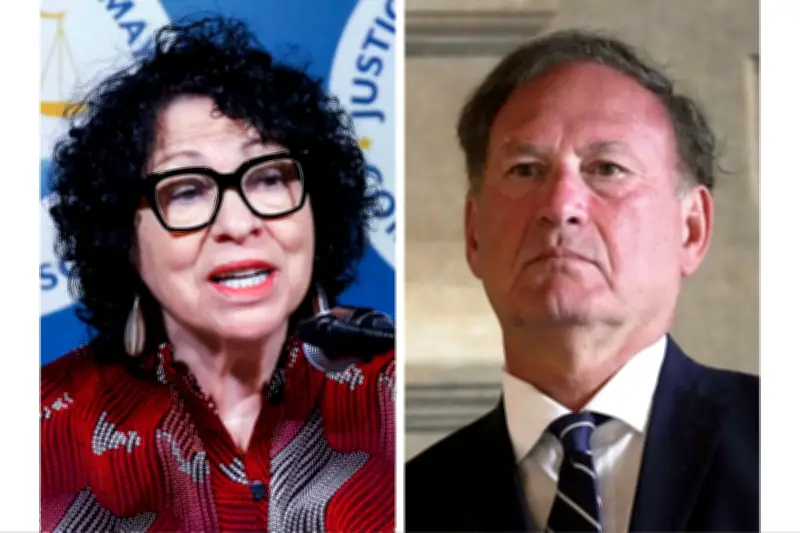
Disagreements between U.S. Supreme Court justices have increasingly bubbled into public view as the court prepares to issue major rulings in the coming weeks. The tensions, often kept behind closed doors, have surfaced through separate public statements and written opinions, underscoring deep ideological divides on issues ranging from abortion to executive power.
Public Spats and Separate Statements
Justice Sonia Sotomayor and Justice Samuel Alito have been at the center of the recent friction. In a speech in New York on September 16, 2024, Sotomayor expressed concern about the court's direction, warning that public trust could erode if decisions appear politically motivated. Alito, speaking in Rome on September 20, 2025, countered by emphasizing the importance of judicial independence and criticized what he called 'outside pressure' on the court.
The Associated Press reported that the justices' remarks reflect a broader trend of increasing public commentary from the bench, a departure from traditional norms of judicial restraint. Legal scholars note that such public disagreements are rare and could signal a fractious term ahead.

Impact on Upcoming Rulings
The court is expected to rule on several high-profile cases in the next month, including challenges to federal regulatory authority, voting rights, and environmental regulations. According to court observers, the public airing of disagreements may influence how the rulings are perceived by the public and lower courts. 'When justices openly criticize each other, it can undermine the legitimacy of the court's decisions,' said Sarah Binder, a political science professor at George Washington University.
The tensions come amid a backdrop of declining public confidence in the judiciary. A recent Gallup poll found that only 40% of Americans approve of the Supreme Court's performance, a record low. The court's approval has dropped steadily since the 2022 decision overturning Roe v. Wade.
Historical Context and Future Implications
While justices have occasionally aired disagreements in written opinions, public speeches and media appearances that criticize colleagues are less common. The current dynamic echoes past periods of tension, such as the 1930s when the court battled President Franklin D. Roosevelt's New Deal legislation. However, the rise of social media and 24-hour news cycles has amplified the impact of such statements.
Chief Justice John Roberts has repeatedly called for collegiality and warned against public feuds, but his efforts appear to have limited effect. The court's conservative majority, solidified by three Trump appointees, has pushed decisions to the right, prompting sharp dissents from liberal justices. In turn, conservative justices have accused their colleagues of overreach.
As major rulings loom, the public disagreements may continue to escalate, potentially reshaping the court's internal dynamics and its relationship with the American public. The decisions expected in the coming weeks will likely test whether the court can maintain its authority amid growing partisan divides.