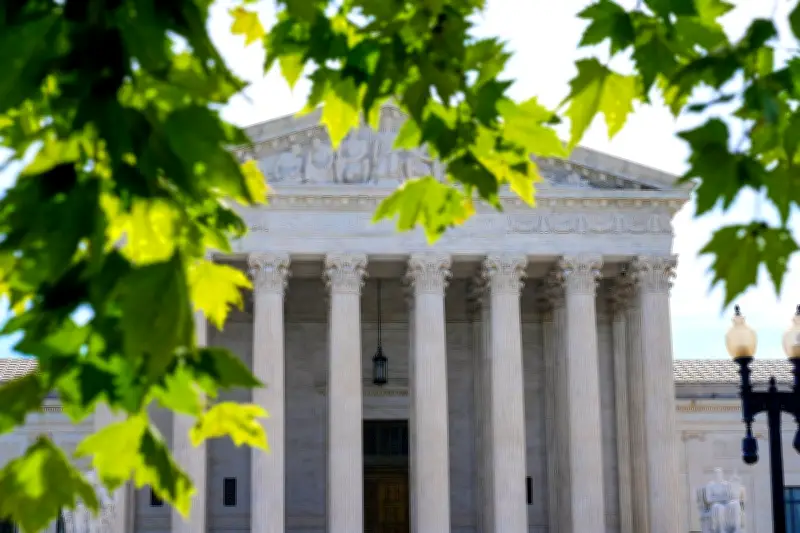
The U.S. Supreme Court has ruled that a Rastafari man cannot sue Louisiana prison officials for cutting his dreadlocks, a decision that upholds qualified immunity for prison staff and limits on religious exercise claims under federal law.
Background of the case
The plaintiff, a practicing Rastafari inmate, alleged that prison guards forcibly cut his dreadlocks in 2014, violating his religious rights under the Religious Land Use and Institutionalized Persons Act (RLUIPA). The incident occurred at the Louisiana State Penitentiary in Angola, where officials claimed the cutting was necessary for security reasons, including contraband searches.
The inmate sought damages and injunctive relief, but lower courts dismissed the suit, citing qualified immunity for prison officials. The Fifth Circuit Court of Appeals upheld that ruling, prompting the appeal to the Supreme Court.

Supreme Court decision
In a 6-3 decision delivered on June 23, 2026, the Supreme Court affirmed the lower court ruling, holding that prison officials are entitled to qualified immunity because the law was not clearly established at the time of the incident. Justice Clarence Thomas wrote the majority opinion, stating that RLUIPA does not create a cause of action for damages against state officials in their individual capacities.
The ruling also noted that even if RLUIPA allowed such claims, the officials would still be immune because no prior Supreme Court precedent had clearly defined the limits of religious grooming rights in prisons. The Court emphasized deference to prison administrators in matters of security and safety.
Dissenting opinions
Justice Sonia Sotomayor, joined by Justices Elena Kagan and Ketanji Brown Jackson, dissented, arguing that the Court's interpretation of RLUIPA was too narrow and that cutting an inmate's dreadlocks without a compelling security reason violates fundamental religious freedoms. Sotomayor wrote, "The majority's decision shields conduct that strips away an essential tenet of faith, leaving inmates without a remedy for such egregious violations."
Impact on religious freedom
The decision has significant implications for incarcerated individuals seeking to practice their religion. According to legal experts, the ruling reinforces the high bar for suing prison officials under RLUIPA for damages, though inmates may still seek injunctive relief. The case has drawn attention from civil liberties groups, who argue that qualified immunity often prevents accountability for rights violations.
The Rastafari faith considers uncut hair, including dreadlocks, as a sacred expression of religious devotion. The cutting of hair is seen as a desecration. The plaintiff's attorneys expressed disappointment, stating that the decision "leaves vulnerable inmates without a meaningful remedy when their deepest religious beliefs are violated."
Broader context
The ruling comes amid ongoing debates over religious accommodations in prisons and the scope of qualified immunity. Similar cases have arisen in other states involving Sikhs, Muslims, and Native Americans, where grooming and headwear policies conflict with security protocols. The Supreme Court's decision may influence how lower courts handle future religious freedom claims behind bars.