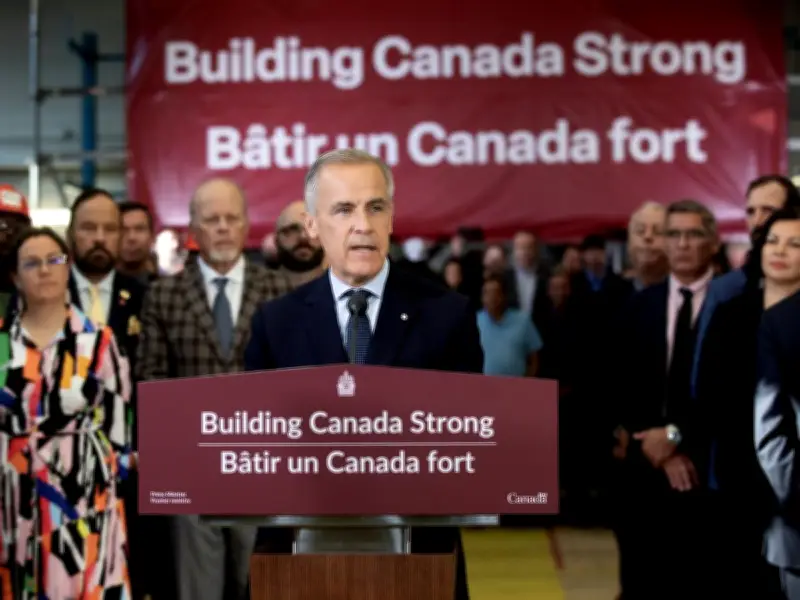
Alberta's separation referendum will be profoundly impacted by the outcome of negotiations between Premier Danielle Smith and Prime Minister Mark Carney on climate policy constraints regarding Alberta oilsands development. Failure to reach a resolution that sets a competitive foundation for the development of the oilsands, inclusive of market access, is untenable for Alberta. Yet, the direction of ongoing negotiations risks that result, according to Dennis McConaghy in a Calgary Herald opinion piece.
Investment Requirements for Alberta's Prosperity
A resolution that works for Alberta is one in which legitimate private sector entities—oilsands producers, major pipeline infrastructure companies, and global refiners—commit to the required investments. This would enable an additional one million barrels per day of production and related incremental pipeline infrastructure to be developed expeditiously.
The risks of open-ended carbon taxes, decarbonization mandates, and a dysfunctional regulatory and governance system within Canada are antithetical to that occurring. They are antithetical to the fundamental economic interests of Alberta.

Smith's Needed Shift in Negotiations
How much longer will Smith stay engaged with Carney seeking accommodation for such risks? Smith needs to fundamentally alter the dynamic with Carney as soon as possible. She needs to set the following conditions for Alberta to prosper within Canada:
- A recognition that the concept of net-zero as a fundamental aspiration, governing climate and energy development for Canada, and certainly Alberta, is no longer relevant. It has been rejected by Alberta, as it has no economic present value for the province or the country.
- Rejection of excessive and open-ended carbon tax liability and decarbonization mandates impacting the competitiveness of incremental oilsands production. Competitiveness must be the paramount consideration regarding project evaluation.
- A public recognition by the Carney government that fulsome development of Alberta's oilsands is the pre-eminent economic priority for Canada, being self-evidently in the public interest. A priority that can no longer be subordinate to federal climate policy.
- The federal government must ensure, legislatively, if necessary, expeditious regulatory approvals of any financially viable pipeline infrastructure required for Alberta's incremental oilsands production. Expeditious here is defined as no more than 12 months of related regulatory process.
- The Carney government must commit to being resolute in dealing with any civil disruptions related to the construction and operation of such infrastructure. This includes expeditious resolution of any perverse judicial interpretations of Section 35 of the Canadian Constitution or other attempted legal obstructions from any province.
McConaghy argues that if Prime Minister Carney has genuine interest in viable economic growth, he should note that growing hydrocarbon production across Western Canada is manifestly in the national interest.