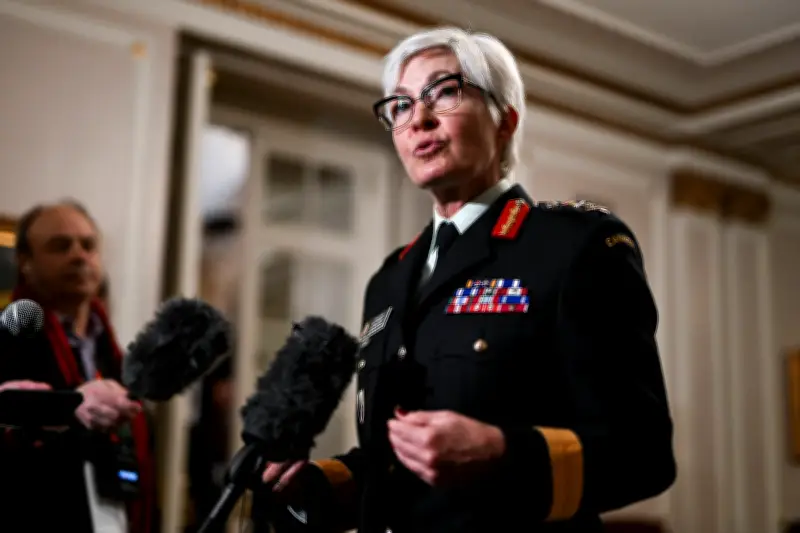
Chief of the Defence Staff General Jennie Carignan has identified Russian missile technologies as the most significant threat to Canada, ahead of the upcoming NATO summit where defence spending and the future of Canada's aging fighter jet fleet will be key topics.
Carignan warns of Russian missile advancements
In an exclusive interview, General Carignan stated that Russia's development of advanced missile systems poses a direct and immediate danger to Canadian security. She emphasized that these technologies outpace current Canadian defence capabilities and require urgent attention from allies.
“The evolution of Russian missile technology is our biggest concern,” Carignan said. “We are working closely with NATO partners to counter this threat.” She noted that the alliance’s collective defence posture must adapt to the changing landscape of long-range precision strikes.

Defence spending and NATO commitments
Carignan’s comments come amid ongoing discussions about Canada’s defence budget and its commitment to meet NATO’s target of spending 2% of GDP on defence. The general stressed that increased funding is necessary to modernize equipment and maintain interoperability with allies.
“We need to invest in capabilities that can detect and neutralize these missile threats,” she added. The upcoming NATO summit in Washington is expected to see renewed pressure on member nations to fulfill their spending pledges.
Fighter jet fleet replacement decision looms
Canada’s aging CF-18 fighter jets are also a critical issue. The government is nearing a decision on a replacement fleet, with contenders including the F-35 and the Saab Gripen. Carignan underscored the importance of selecting a platform that can counter advanced Russian aircraft and missile systems.
“Our next fighter must be able to operate in a contested environment,” she explained. “It’s not just about air superiority; it’s about defending against cruise missiles and other stand-off weapons.”
Broader security context
General Carignan’s assessment aligns with recent intelligence reports highlighting Russia’s investment in hypersonic and cruise missile technology. She noted that Canada’s geographic position makes it vulnerable to threats across the Arctic, where Russian activity has increased.
“The Arctic is a strategic corridor, and we must ensure we can monitor and defend it,” she said. Canada is collaborating with the United States and other Arctic nations to enhance surveillance and response capabilities.
The general’s remarks also come as Canada hosts World Cup events, drawing global attention. While security measures are robust, the missile threat remains a long-term priority for military planners.