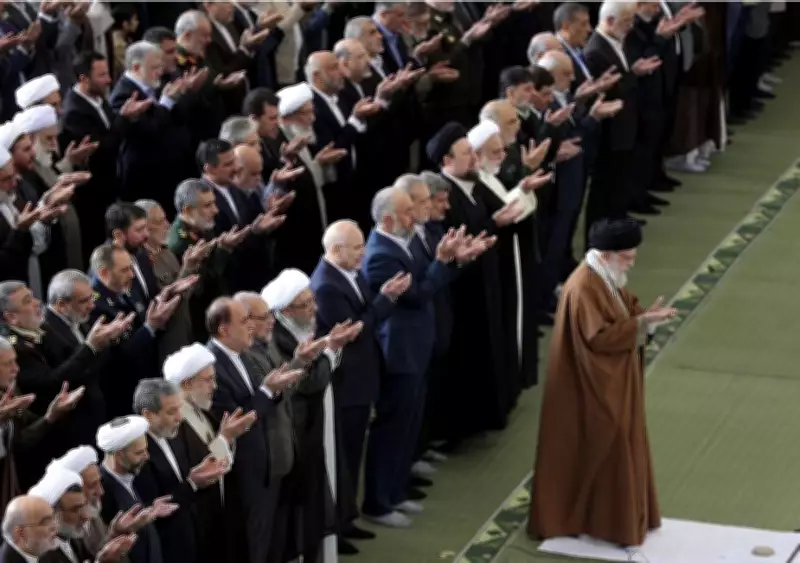
Iran's Succession Process Begins After Khamenei's Death
The passing of Supreme Leader Ayatollah Ali Khamenei after nearly four decades in power has initiated a critical period for Iran's political future. The death occurred following an airstrike campaign conducted by the United States and Israel, creating immediate questions about leadership transition in the Islamic Republic.
Temporary Leadership Council Assumes Control
In accordance with Iran's constitution, the country has established a temporary leadership council to govern during this transitional period. This council consists of three key figures: President Masoud Pezeshkian, Judiciary Chief Gholamhossein Mohseni Ejei, and a member of the Guardian Council selected by Iran's Expediency Council.
President Pezeshkian, representing reformist elements within Iranian politics, and Judiciary Chief Ejei, a hard-line figure, will jointly "temporarily assume all the duties of leadership" while the permanent succession process unfolds. This interim arrangement ensures governmental continuity as the nation navigates this rare leadership transition.

Assembly of Experts to Select Permanent Successor
While the temporary council maintains governance, Iranian law mandates that the 88-member Assembly of Experts "must, as soon as possible" select a new supreme leader. This panel consists entirely of Shiite clerics who are popularly elected every eight years, though their candidacies require approval from the Guardian Council.
The Guardian Council, Iran's constitutional watchdog body, maintains significant control over this process through its candidate vetting authority. This was demonstrated in March 2024 when the council barred former President Hassan Rouhani from election to the Assembly of Experts. Rouhani, a relative moderate who helped negotiate the 2015 nuclear deal, was thus excluded from participating in the succession deliberations.
Potential Successor Candidates Emerge
The selection process occurs largely behind closed doors, making it difficult to identify clear frontrunners. Previously, hard-line President Ebrahim Raisi was considered a potential successor, but his death in a May 2024 helicopter crash removed him from contention.
This development has shifted attention to Mojtaba Khamenei, the 56-year-old son of the late supreme leader. As a Shiite cleric with close ties to his father's administration, Mojtaba represents a potential dynastic succession. However, he has never held formal government office, and a father-to-son transfer could generate significant controversy.
Such a familial succession might provoke criticism from both opponents of clerical rule and supporters of Iran's Islamic system, potentially viewed as un-Islamic and reminiscent of the dynastic rule that the 1979 revolution sought to overthrow.
Historical Context of Leadership Transitions
This represents only the second transfer of supreme leadership power since Iran's 1979 Islamic Revolution. The previous transition occurred in 1989 following the death of Grand Ayatollah Ruhollah Khomeini, who led Iran through its formative revolutionary period and the eight-year war with Iraq.
The current succession process unfolds against a backdrop of regional conflict, including Israel's 12-day war against Iran in June 2025. This geopolitical context adds complexity to what is already a delicate constitutional and political process that will shape Iran's trajectory for decades to come.