The Trump Administration's Calculated Decision to Launch Military Action Against Iran
In early 2026, the United States under President Donald Trump made a pivotal decision to initiate military action against Iran, marking a significant escalation in long-standing tensions. This move followed weeks of substantial military buildup in the Middle East, representing the largest American deployment since the 2003 Iraq invasion that ultimately removed Saddam Hussein from power.
A Massive Military Buildup
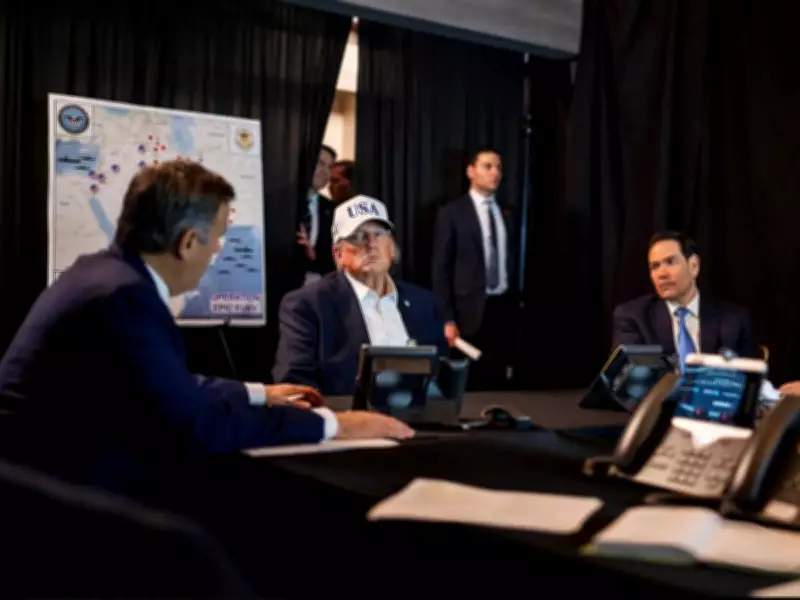
For several weeks leading up to the decision, the Trump administration assembled an impressive naval armada consisting of aircraft carriers and destroyers positioned strategically throughout Middle Eastern waters. This maritime force received substantial reinforcement from squadrons of advanced F-35 and F-22 fighter jets dispatched to allied bases across the region. The visible military presence served as both a demonstration of American capability and a clear signal to Iranian leadership.
The primary objective behind this substantial deployment was to pressure Iran's ruling establishment into making concessions they had resisted for decades. Specifically, the United States demanded that Iran abandon its nuclear development program and cease support for armed proxy groups throughout the region. While President Trump publicly expressed preference for a diplomatic resolution with Tehran, the continued military buildup suggested alternative preparations were underway.

Diplomatic Efforts and Internal Debates
Even as military assets accumulated in the region, diplomatic channels remained active. President Trump's special envoys, Jared Kushner and Steve Witkoff, prepared for negotiations with Iranian counterparts in Geneva. These discussions represented what many hoped would be a final opportunity to avoid open conflict through diplomatic means.
Behind the scenes, however, significant debate unfolded within American intelligence and policy circles. Conflicting assessments emerged regarding the urgency of the Iranian nuclear threat. While U.S. Defense Intelligence Agency analyses suggested Iran's nuclear progress remained constrained, Israeli intelligence painted a far more alarming picture of rapid advancement. Some American officials cautioned against over-reliance on Israeli conclusions, creating internal tension as decision-makers weighed their options.
The Geneva Negotiations and Their Aftermath
The Geneva talks between American and Iranian representatives ultimately failed to produce the breakthrough needed to de-escalate tensions. Despite initial optimism from Iranian officials who believed progress was being made during a second round of discussions, American negotiators concluded that every diplomatic avenue had been exhausted after sixteen hours of intensive talks.
From the American perspective, Iranian Supreme Leader Ayatollah Ali Khamenei's fundamental worldview appeared incompatible with President Trump's vision for the Middle East. This philosophical impasse, combined with the lack of concrete progress in Geneva, shifted the administration's calculus decisively toward military action.
The sense of impending conflict became so palpable that Omani Foreign Minister Badr Albusaidi, who had mediated the Geneva talks, flew directly to Washington following the negotiations. He immediately sought a meeting with Vice President JD Vance, known for his skepticism toward foreign military interventions, in what appeared to be a last-ditch effort to prevent open hostilities.
A Strategic Shift Toward Conflict
President Trump's public statements during this period reflected the administration's hardening position. During his State of the Union address, the president warned that Iranian officials were "again pursuing their sinister ambitions" to reconstitute their nuclear program following previous attacks by the United States and Israel.
The administration's decision-making process relied heavily on air power as its primary military instrument, avoiding substantial ground troop commitments. This approach reflected both strategic calculation and political considerations, as the administration sought to rally domestic support while minimizing American casualties.

Secretary of State Marco Rubio's briefing of senior congressional leaders further indicated that the administration was preparing for significant military action, even as it maintained public commitments to continued diplomatic engagement. The simultaneous pursuit of military and diplomatic tracks created an atmosphere of uncertainty that ultimately resolved in favor of military confrontation.
This detailed account of the Trump administration's decision-making process reveals a complex interplay of military strategy, diplomatic maneuvering, and intelligence assessment that culminated in the choice to initiate conflict with Iran in early 2026.