Iran Launches Massive Retaliation After U.S.-Israeli Strike Kills Supreme Leader
Explosions rocked multiple countries across the Middle East on Sunday as Iran unleashed a devastating retaliatory strike following a joint U.S.-Israeli operation that killed Iran's Supreme Leader Ayatollah Ali Khamenei and other senior officials. The coordinated attack represents a significant escalation in regional tensions that has already claimed hundreds of lives.
Waves of Missiles Target Israel and U.S. Bases
Tehran responded to the death of its hardline leader by launching extensive waves of missiles and drones targeting both Israel and numerous U.S. military installations throughout the Middle East. The Islamic Revolutionary Guard Corps confirmed attacks on American bases in Bahrain, Iraq, Jordan, Kuwait, Oman, Qatar, Saudi Arabia, and the United Arab Emirates.
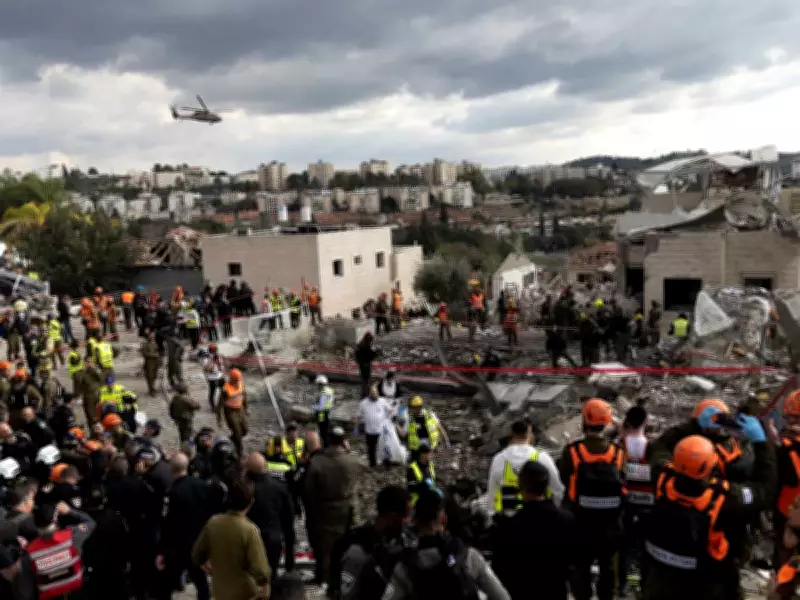
The deadliest single attack occurred in the Israeli town of Beit Shemesh, located just west of Jerusalem, where a direct missile strike killed eight people and injured more than twenty others according to Reuters reports. Israeli officials confirmed that despite successful interceptions of many incoming projectiles, one missile struck a building where civilians were sheltering from the ongoing air raids.

In a statement posted on social media platform X, the Israel Defence Forces accused Iran of deliberately firing missiles toward populated areas, "killing innocent civilians" in what they described as a direct attack on civilian infrastructure. Israeli authorities reported that repeated barrages from Tehran have resulted in at least ten fatalities and more than 120 injuries across the country.
U.S. Military Assets Targeted but Unharmed
Iranian state media reported that the U.S. aircraft carrier USS Abraham Lincoln was specifically targeted with four ballistic missiles during the Sunday attacks. The warship represents one of two American aircraft carriers recently deployed to the region and was positioned relatively close to Iranian shores at the time of the assault.
However, U.S. Central Command quickly clarified the situation in their own social media statement, noting that "The Lincoln was not hit. The missiles launched didn't even come close" to striking the vessel. Despite this successful defense, Iranian strikes did claim lives in allied nations, with one person killed in Abu Dhabi and another fatality reported in Kuwait, alongside dozens of injuries across the region.
Casualties Mount on Both Sides
The U.S. military confirmed on Sunday that three American service members had been killed and five others seriously wounded during what they've designated "Operation Epic Fury" - the joint military action against Iran. Central Command's statement on X noted that several additional personnel sustained minor shrapnel injuries and concussions but were expected to return to duty shortly.
In Tehran, witnesses described largely deserted streets as citizens sheltered during heavy airstrikes that sent massive plumes of smoke into the sky above government buildings. Iranian authorities reported that more than 200 people have been killed since the initial U.S. and Israeli strikes began, though these numbers remain unverified by independent sources.
Regional Disruption and Political Transition
The conflict has caused significant disruption across the Middle East, with flight tracker FlightAware reporting more than 2,400 cancelled flights as multiple countries closed their airspace. Major airlines including Air Canada suspended service to destinations such as Tel Aviv and Dubai amid the escalating violence.
Meanwhile, Iran's political leadership announced transitional measures following the death of their supreme leader. President Masoud Pezeshkian confirmed in a state television broadcast that a new leadership council had commenced operations, while Foreign Minister Abbas Araghchi indicated that a new supreme leader would be selected within "one or two days" according to established constitutional procedures.
The situation remains fluid as diplomatic efforts continue behind the scenes to prevent further escalation in a region already grappling with decades of conflict and tension between regional powers and international actors.