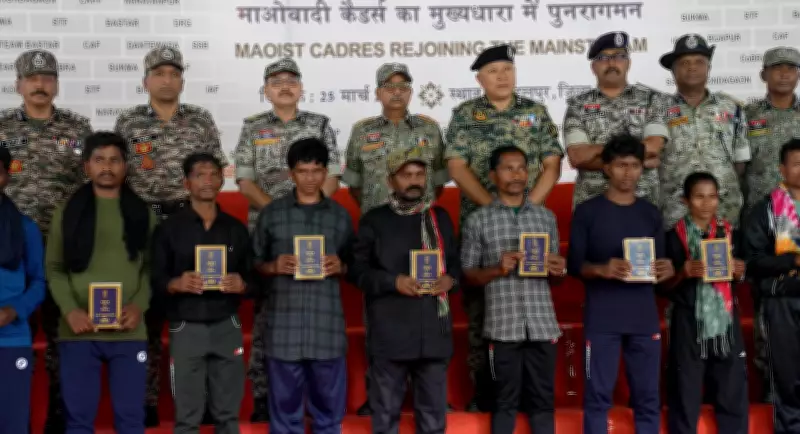
Some of the world's last Maoist rebels are in India, and their decades-long rebellion is in its death throes. According to a CNN report, hundreds of former Maoists have surrendered to Indian authorities in the state of Chhattisgarh, marking a significant decline in the insurgency that has plagued central and eastern India for over 50 years.
Surrenders Signal End of Era
In March 2026, a group of Maoist fighters laid down their arms in Chhattisgarh, a state that has been a stronghold of the rebellion. The surrender ceremony, captured by CNN, showed rebels handing over weapons and pledging to reintegrate into society. This event is part of a broader trend that has seen the insurgency weaken due to a combination of government counter-insurgency operations, development initiatives, and internal divisions.
The Maoist insurgency, also known as the Naxalite movement, began in 1967 in the village of Naxalbari in West Bengal. It has since spread to several states, including Chhattisgarh, Odisha, Jharkhand, and Andhra Pradesh. The rebels, who claim to fight for the rights of landless peasants and tribal communities, have been responsible for thousands of deaths over the decades.

Government Efforts Pay Off
The Indian government has intensified its efforts to crush the rebellion through a multi-pronged strategy. Security forces have conducted sustained operations in Maoist strongholds, while the government has also launched development programs to address grievances such as land rights and poverty. Additionally, surrender and rehabilitation schemes have encouraged rebels to give up arms.
According to official data, the number of Maoist-related incidents has dropped significantly in recent years. In 2025, the Ministry of Home Affairs reported a 40% reduction in violence compared to the peak years of 2010-2015. The surrenders in Chhattisgarh are seen as a major victory for the government's approach.
Challenges Remain
Despite the progress, experts warn that the insurgency is not completely over. Maoist groups still control some remote areas and continue to recruit among marginalized communities. The recent surrenders, however, indicate that the movement is losing steam. Many former rebels have cited disillusionment with the leadership and the desire for a normal life as reasons for giving up.
The Indian government has pledged to continue its efforts to fully eradicate the insurgency. Rehabilitation programs for former rebels include job training, education, and financial assistance to help them reintegrate into society.
The decline of the Maoist rebellion in India is a significant development in the global fight against left-wing extremism. As one of the last remaining Maoist insurgencies in the world, its end would mark a historic shift in India's internal security landscape.