The first year of Donald Trump's second term in 2025 has been defined by a rapid and profound dismantling of long-standing American norms and institutions. Political observers warned of a disruptive presidency, but the scale and speed of the changes have been staggering, affecting everything from the justice system and public health to immigration and historic preservation.
The Erosion of Institutional Guardrails
Across the federal government, actions once considered unthinkable became operational reality. The Department of Justice saw attorneys brazenly mislead judges in court, while the Supreme Court issued rulings that effectively sanctioned racial profiling in immigration enforcement. In a short, unsigned order in September, the Court allowed Department of Homeland Security (DHS) practices to continue despite a lawsuit accusing the agency of discriminatory stops based on appearance, language, or employment. Justice Sonia Sotomayor dissented, stating, "We should not have to live in a country where the Government can seize anyone who looks Latino, speaks Spanish, and appears to work a low wage job."
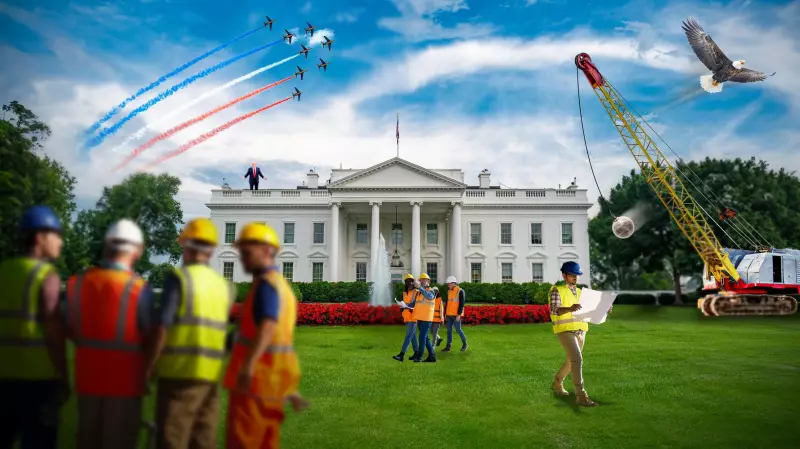
Perhaps one of the most visually symbolic acts was the demolition of the White House's East Wing. Despite objections from historians and a lawsuit from the National Trust for Historic Preservation, construction workers tore down the historic structure to make way for a gaudy ballroom, with the administration arguing the president could do as he wished with the property.

Policy Shifts with Global and Domestic Consequences
The administration's policy reversals had deadly serious impacts. The U.S. Agency for International Development (USAID), a critical global aid organization, was swiftly dismantled, a move championed by figures like Elon Musk. Observers link the agency's destruction to hundreds of thousands of avoidable deaths worldwide and a significant shift in how America projects power internationally.
Domestically, public health agencies under Health and Human Services Secretary Robert F. Kennedy Jr. actively promoted anti-vaccine misinformation. This contributed to a major backslide, with 1,912 confirmed measles cases as of December 9, 2025—the highest number since the disease was declared eliminated in 2000. Of these cases, 92% were in unvaccinated individuals or those with unknown status, resulting in three confirmed deaths and 218 hospitalizations.
Crackdowns, Deportations, and Public Pushback
The administration's immigration crackdown intensified, normalizing extreme tactics. This included the deportation of immigrants to third countries they had never visited, such as Panama, Costa Rica, and South Sudan, solely to increase removal numbers. Furthermore, the president deployed National Guard troops to Democratic-led states like California, Oregon, and Illinois against the wishes of their governors, a move federal judges have since called illegal.
However, not all attempts to normalize new realities succeeded. When the Federal Communications Commission pressured ABC to suspend late-night host Jimmy Kimmel for jokes about the Trump administration, a massive public backlash ensued. After six days of protests and subscription cancellations targeting parent company Disney, Kimmel was reinstated.
Similarly, the case of Mahmoud Khalil, a green card holder and Columbia University student arrested after pro-Palestinian protests, became a flashpoint. Despite being targeted for his beliefs, widespread protests led to his release from Immigration and Customs Enforcement (ICE) detention after three months. Khalil emerged more determined, telling HuffPost, "My arrest accidentally gave me this platform... I will take that responsibility with pride."
The year 2025 demonstrated both the vulnerability of democratic norms to concentrated power and the enduring capacity for public resistance. As the country moves into 2026, the tension between these two forces is set to define the American political landscape.