

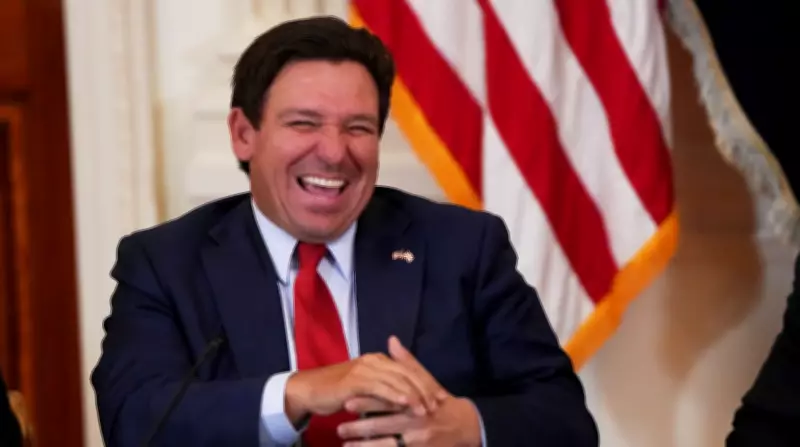
DeSantis Advances Florida Redistricting Plan Despite Republican Apprehensions
Governor Ron DeSantis of Florida is moving forward with a controversial plan to redraw the state's congressional district maps, aiming to secure additional Republican seats in the U.S. House of Representatives. This initiative comes despite significant unease within the GOP ranks and strong opposition from Democrats, who argue it violates the state's constitutional ban on political gerrymandering.
Special Session and Supreme Court Timing
The special session, originally scheduled to begin on Monday, has been postponed to April 28. DeSantis' office has not responded to inquiries about the delay. The governor's rationale for the session hinges on an anticipated U.S. Supreme Court ruling that could invalidate a provision of the Voting Rights Act used to create majority-Black districts, including in Florida. However, this ruling is not expected until after the session concludes on May 1, casting doubt on the timing of the effort.
On Friday, the Supreme Court issued only one decision, unrelated to the Louisiana case that DeSantis believes would enable him to redraw Florida's maps. Currently, the state's congressional delegation favors Republicans with a 20-8 advantage over Democrats, a result of aggressive gerrymandering.

Historical Context and National Implications
DeSantis' push for mid-decade redistricting follows a broader trend initiated by former President Donald Trump, who urged GOP-led states to redraw maps to maintain Republican control of the House during his final term. Texas quickly complied, aiming to gain four additional seats, prompting California Governor Gavin Newsom to push for a voter initiative that would give Democrats five more seats. Similarly, Virginia Democrats are backing a referendum that could yield four additional Democratic seats.
In Florida, actual Republican members of the House delegation are less enthusiastic about a new map emerging just weeks before the June qualifying deadline. Some have vocally opposed the plan, while nearly half privately lobbied against it during the regular legislative session earlier this year, according to an anonymous top Florida Republican. This opposition stems from concerns over self-preservation, but it is unlikely to deter DeSantis, who is driven by presidential ambitions.
Political Motivations and Potential Consequences
DeSantis, who ran for the 2024 Republican presidential nomination but dropped out after poor performance in the Iowa caucuses, is expected to run again in 2028. Political consultants suggest that his redistricting push is aimed at bolstering his image as a fighter against Democrats, even if it risks Republican House members losing seats. Mac Stipanovich, a longtime Republican consultant in Florida, questioned this rationale, noting that primary voters in Iowa or New Hampshire may not recall a redistricting scuffle from 2026 by 2028.
Stipanovich speculated that DeSantis' motive might be simpler: to curry favor with Trump as he approaches the end of his term in early 2027 due to term limits. "The man is going to need a job in a few months," Stipanovich said.
Past Actions and Current Risks
DeSantis has a history of using his power to maximize GOP seats. In 2022, he vetoed legislature-drawn maps that would have given Republicans a 16-12 or 18-10 advantage, instead insisting on his own map that produced 20 GOP seats. This margin proved crucial in the midterm elections, providing Republicans with a thin House majority that has since narrowed due to resignations and special elections.
Recent Democratic successes in special elections, both nationally and in Florida, reflect Trump's declining popularity and have made many state Republicans wary of DeSantis' plan. Redrawing district lines to increase the Republican advantage could backfire, potentially leading to losses if a Democratic wave occurs in November. Legal challenges are almost certain, with Democratic elections lawyer Marc Elias already vowing to fight any new map, predicting that Florida will "pass a new map, and they are definitely going to get sued, and they're going to lose."
As the special session approaches, the political and legal battles over Florida's congressional maps intensify, with DeSantis' ambitions clashing against practical concerns and constitutional constraints.






