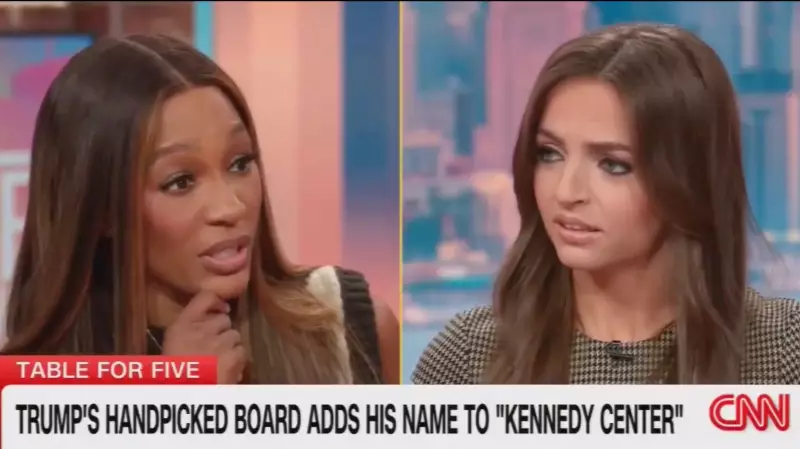
A recent segment of CNN's "Saturday Morning Table for Five" descended into a heated confrontation over the controversial decision to add former President Donald Trump's name to the John F. Kennedy Center for the Performing Arts. The debate quickly expanded beyond the immediate issue to a broader clash over historical legacy and the racial reckoning of 2020.
A Clash Over Legacy and Disrespect
The panel's discussion ignited when comedian Paul Mecurio condemned the renaming move as profoundly disrespectful to President John F. Kennedy's memory. Mecurio argued that Kennedy, a commander-in-chief who died serving the country, deserved the same respect as those honored on monuments like the Vietnam Veterans Memorial. He suggested such a change to that memorial would cause public outrage.
This criticism was challenged by Brianna Lyman, an election correspondent for The Federalist. Lyman dismissed the Democratic opposition as "disingenuous," despite the fact that Trump himself appointed the board members who approved the "Trump-Kennedy Center" name change. "I personally don't care that much," Lyman stated, before pivoting to a comparison with the events of 2020.

2020 Protests Become Central Flashpoint
Lyman directly linked the current controversy to the wave of renaming that followed the 2020 racial justice protests. She accused those now upset about the Kennedy Center of hypocrisy, claiming they showed no concern when hospitals, parks, schools, and streets were renamed "in the name of George Floyd." When Mecurio interjected to clarify he is not a Democrat, Lyman continued, questioning how many critics had frequented the Kennedy Center before Trump's presidency.
Broadcaster Cari Champion, the lone Black panelist on the show, forcefully countered this framing. She corrected Lyman, emphasizing that the 2020 protests were about systemic police brutality affecting Black Americans, not solely about George Floyd. "They had a racial reckoning and they understood that this country had done some things that were very unfair, especially to marginalized, especially to Black people," Champion stated, insisting on being allowed to finish her point.
Historical Statues and the "Overcorrection" Debate
The debate then turned to the removal of statues in 2020. When Champion noted many commemorated slave owners, Lyman interrupted to list former Presidents Thomas Jefferson and George Washington as examples. Champion explained the removals were an effort to honor those "who could not speak for themselves." Lyman retorted by thanking Jefferson for the First Amendment that allowed Champion to speak freely.
In her closing argument, Champion turned the focus back to Trump's actions. She suggested that while some responses in 2020 may have been an overcorrection, the current effort to normalize Trump putting his name on everything is another damaging overcorrection. "The fact that Trump is putting his name on every single thing and you want to normalize it like it's normal tells me you're the problem and not the solution," she asserted. Champion concluded by warning that continued disrespect for the presidency could push America into an irrevocable state of disrepair.