Canada's Political Landscape Embraces Orwellian Doublethink in China Policy
George Orwell's dystopian novel 1984 was intended as a cautionary tale about the perils of dictatorship and the erosion of objective truth. However, in contemporary Canadian politics, it appears to have become an unwitting guidebook, with the concept of "doublethink"—the ability to hold two contradictory beliefs simultaneously—taking center stage.
Contradictory Views on China Highlight Memory Hole Tactics
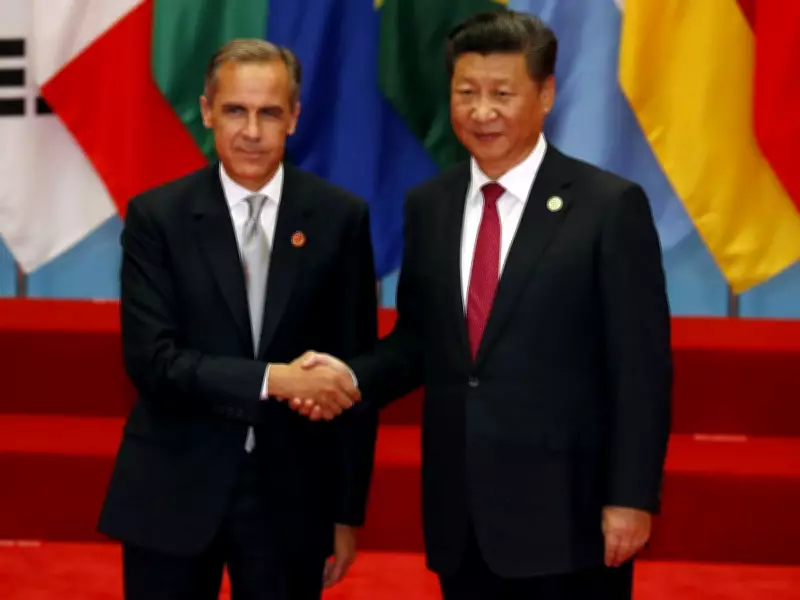
Prime Minister Mark Carney's statements on China exemplify this phenomenon. In April 2025, he labeled China as Canada's greatest security threat, yet by January 2026, he referred to it as a strategic partner. This shift requires not only doublethink but also the practical application of Orwell's "memory hole," where historical evidence is erased to align with new positions.
The foreign interference inquiry of January 2025 reported that China is the most active perpetrator targeting Canada's democratic institutions, viewing the country as a high-priority target. To now believe this threat has diminished, one must accept that admitting 49,000 Chinese-made electric vehicles annually will deter China from activities such as transnational repression, industrial espionage, and intellectual property theft.

Climate Policy Shifts Further Illustrate Doublethink
Doublethink extends beyond foreign relations into domestic policy. The federal Liberal government spent a decade condemning opposition to its consumer carbon tax, accusing critics of endangering the planet. Now, it claims the tax was never central to its climate strategy, despite failing to meet industrial greenhouse gas reduction targets after investing $200 billion.
This reversal necessitates ignoring years of ministerial statements and reports that emphasized the tax's importance, effectively sending them down the memory hole. For instance, former health minister Mark Holland's 2024 remark mocking Conservative proposals to remove the tax contrasts sharply with current dismissals, highlighting the contradictions.
Political Defections and the Death of Critical Thinking
The recent defection of three Conservative MPs—Chris d'Entremont, Michael Ma, and Matt Jeneroux—to the Carney Liberals underscores how doublethink permeates modern politics. Their move, framed as more than opportunism, reflects a broader trend where holding contradictory views becomes normalized, eroding critical thinking.
As noted by commentator John Robson, Canada's inaction against Chinese interference, despite clear evidence, suggests a willingness to ignore reality in favor of a desired narrative. This performative politics, where actors seamlessly switch stances, threatens democratic integrity and public discourse.
In essence, Canada's approach to China and climate policy mirrors Orwell's warnings, with doublethink enabling a disconnect between rhetoric and reality. As political defections increase, this trend may further entrench a culture where objective truth is sacrificed for convenience, echoing the dystopian visions of 1984.