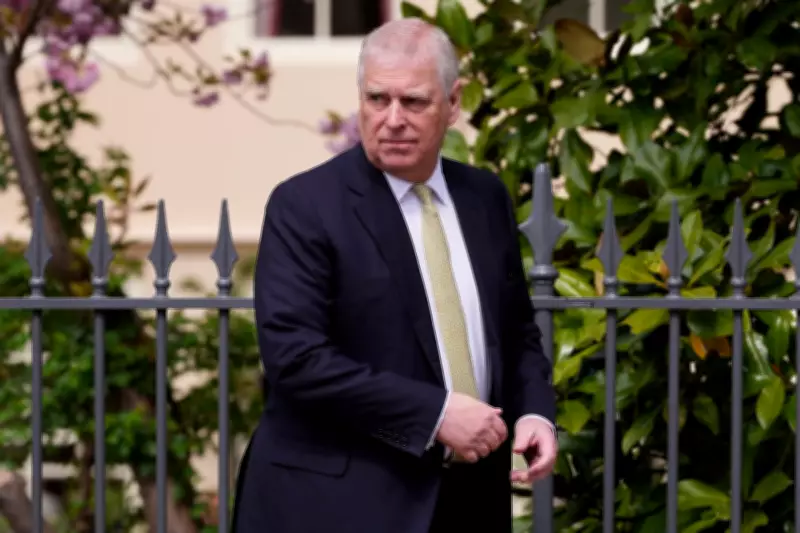
In a significant public statement, King Charles III has addressed the ongoing investigation involving his brother, Prince Andrew, emphasizing that the legal process must be allowed to take its course without interference. The monarch's comments come amid heightened scrutiny following Andrew's arrest by U.K. police on suspicion of misconduct in public office, a development linked to the broader Epstein scandal that has ensnared numerous high-profile figures.
Monarch's Firm Stance on Legal Proceedings
King Charles III, who ascended to the throne following the passing of Queen Elizabeth II, made his position clear during a recent engagement, underscoring the importance of upholding the rule of law. "The law must take its course," he stated, a declaration that signals the royal family's commitment to transparency and accountability in this sensitive matter. This stance marks a departure from previous royal handling of controversies, reflecting a modern approach to governance and public trust.
Background of the Investigation
Prince Andrew, also known as Andrew Mountbatten-Windsor, was arrested earlier this year as part of a probe into allegations of misconduct in public office. The investigation is connected to the Jeffrey Epstein scandal, which has involved multiple accusations of sexual abuse and financial misconduct. Andrew has faced previous allegations and legal battles, including a civil lawsuit settled out of court, but this criminal investigation represents a more severe escalation.

Key details of the case include:
- Arrest on suspicion of misconduct in public office, a charge that can carry significant penalties under U.K. law.
- Ongoing police inquiries that are examining evidence and witness testimonies.
- Public and media attention that has intensified due to the royal connection and the scandal's notoriety.
Implications for the Royal Family
This development poses a challenge for the monarchy, which has worked to modernize its image and distance itself from past controversies. King Charles III's statement is seen as an effort to balance familial loyalty with the demands of justice and public expectation. By affirming the primacy of the law, he aims to reinforce the institution's integrity during a turbulent period.
Experts note that this approach may help mitigate reputational damage, as it aligns with broader societal calls for accountability among powerful individuals. However, it also underscores the personal and political complexities faced by the royal family, navigating between private bonds and public duty.
Legal and Social Context
The investigation into Prince Andrew occurs against a backdrop of global reckoning with issues of abuse of power and institutional accountability. In the U.K., there is increasing pressure on authorities to handle high-profile cases impartially, regardless of the individuals involved. This case is being closely watched for its potential to set precedents in how such matters are addressed within elite circles.
As the legal process unfolds, further developments are anticipated, including potential charges, court proceedings, and ongoing public discourse. King Charles III's remarks serve as a reminder that no one is above the law, a principle that will be tested in the coming months as the investigation progresses.