Ambassador Bridge Owner's $1 Million Donation to Trump PAC Precedes Border Bridge Threat
The owner of the Ambassador Bridge, a critical crossing connecting Detroit, Michigan, and Windsor, Ontario, made a substantial $1 million donation to a political action committee supporting former U.S. President Donald Trump. This significant financial contribution occurred shortly before Trump publicly threatened to obstruct a competing Canadian bridge project, raising questions about potential political influence over cross-border infrastructure.
Timing of Donation and Threat Raises Eyebrows
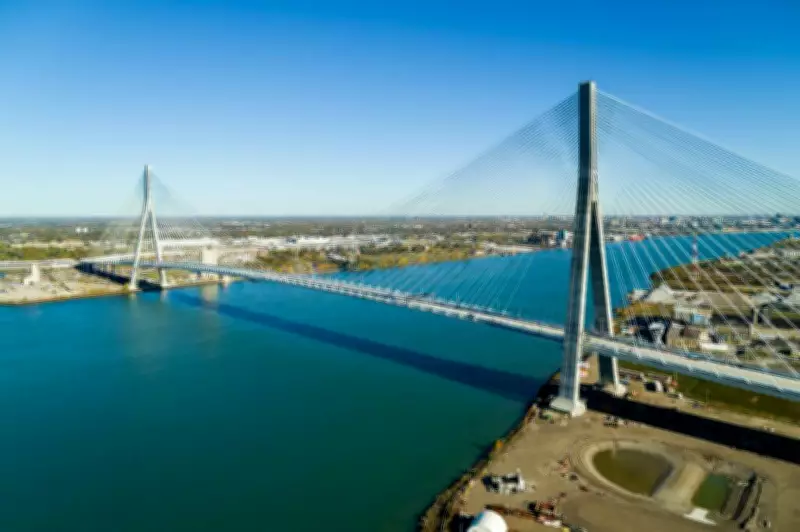
The $1 million donation was processed in early 2026, according to financial disclosures. Shortly thereafter, Trump issued statements vowing to block the construction and operation of the Gordie Howe International Bridge, a publicly funded project designed to alleviate traffic congestion and enhance trade efficiency between the United States and Canada. The Gordie Howe Bridge, named after the legendary hockey player, represents a major binational infrastructure initiative.
The Ambassador Bridge is currently the busiest international border crossing in North America, handling a substantial portion of trade between the two nations. Its private ownership has long been a point of contention, with critics arguing that a single entity controlling such vital infrastructure poses economic and security risks. The owner's donation to the Trump PAC, which supports the former president's political agenda and potential re-election efforts, introduces a new layer of complexity to the ongoing debate over border management and infrastructure sovereignty.

Broader Implications for U.S.-Canada Relations
This development occurs amidst a series of other notable events affecting the bilateral relationship. For instance, the U.S. Supreme Court recently issued a ruling that Trump cited as justification for proposing to raise tariffs to 15 percent, a move that could significantly impact cross-border trade. Additionally, the U.S. military has airlifted a small nuclear reactor as part of Trump's push to rapidly deploy nuclear power, highlighting shifts in American energy and defense policy that may influence continental partnerships.
On the Canadian side, the federal government has named a new chief public health officer and certified Gulfstream G500 and G600 jets, reflecting ongoing domestic priorities in health and transportation. However, the potential obstruction of the Gordie Howe Bridge by U.S. political forces represents a direct challenge to a key Canadian infrastructure project and could strain diplomatic ties.
Political and Economic Context
The $1 million donation underscores the intense political lobbying and financial interests surrounding border infrastructure. Private bridge owners have historically opposed publicly funded competing projects, fearing loss of toll revenue and market dominance. The donation to a Trump-affiliated PAC suggests an attempt to leverage political connections to influence policy decisions that favor existing private interests over new public initiatives.
Analysts note that such large political contributions, when followed by policy threats targeting competitors, can create perceptions of undue influence, even if no direct quid pro quo is established. The situation highlights the intricate interplay between private capital, political fundraising, and international infrastructure development, with significant ramifications for trade flows and economic stability in the Great Lakes region.
As both nations monitor these developments, the future of the Gordie Howe International Bridge remains uncertain, pending the outcome of U.S. political processes and the potential implementation of Trump's threatened actions. The episode serves as a stark reminder of how political contributions can intersect with critical infrastructure projects that affect millions of citizens and billions in economic activity.