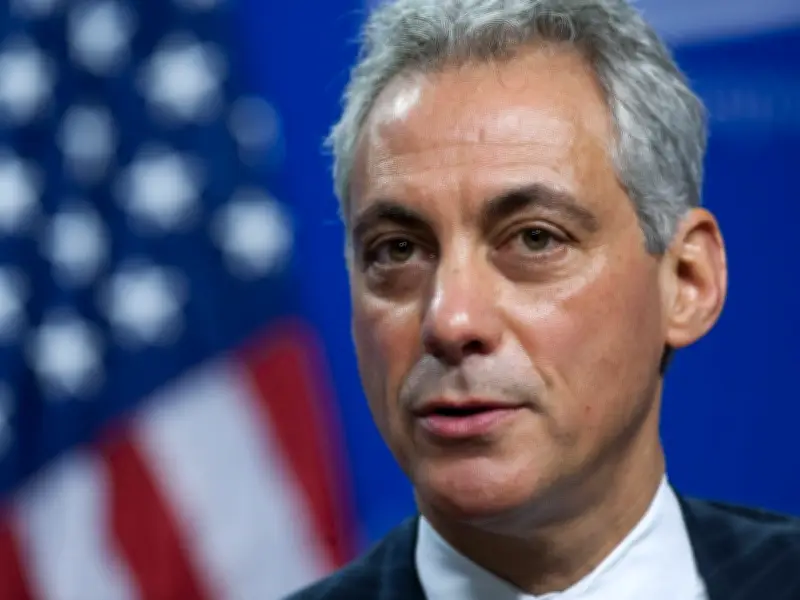
Rahm Emanuel, the former Chicago mayor and Obama acolyte, delivered a scathing lecture at Tel Aviv University on July 10, 2026, accusing Israel of becoming a 'pariah' and demanding a new direction to preserve the U.S.-Israel alliance. Writing in the National Post, Avi Benlolo argues that Emanuel's self-righteous finger-wagging ignores the context of Israel's survival mode since the October 7 atrocities, including defending against Hamas, Hezbollah, the Houthis, and Iran.
Emanuel's Critique and Its Context
Emanuel stated, 'I flew here from Chicago to tell you directly where things need to head if we are going to maintain the historic alliance that binds our two democracies.' He warned that 'without question, the alliance is at a crossroads. It cannot stand or survive as it has been. To maintain the strength of our ties, we need significant changes and a new direction.' Benlolo notes that Emanuel's ability to speak openly in Tel Aviv, unlike in Tehran, underscores the strength of the U.S.-Israel alliance, a point Emanuel overlooked.
Benlolo questions when anyone last stood before Palestinian Authority President Mahmoud Abbas to demand a new direction. He accuses Emanuel of imposing the growing anti-Israel narrative within the Democratic Party, which now requires criticism of Israel to win seats—or, in Emanuel's case, the presidency. The war has devastated Israel's popularity, with some European nations turning away and America's support teetering, especially in the Democratic Party influenced by New York Mayor Zohran Mamdani's anti-Israel stance.

The Insult of Calling Israel a 'Pariah'
Benlolo calls Emanuel's characterization of Israel as 'a territorial pariah' a special kind of chutzpah, given that Israel has been fighting barbarians on behalf of the world while mourning its sons and daughters and suffering post-trauma from the October 7 savagery. He asks, 'Are you serious?' in response to Emanuel's claim that Israel turned from a start-up nation into a pariah because of a war it did not start.
Emanuel's advice—'You need to think about what that means for your future'—is met with Benlolo's retort that every Israeli and Jew knows Israel is defending its future and protecting its past. A strong Israel, Benlolo argues, will produce peace, protect democracy, and reinvigorate the Abraham Accords, while allowing continued innovation and technological miracles that nations like America enjoy.
Sanctions Threat Undermines Alliance
Benlolo condemns Emanuel's threat of sanctions against Israeli banks, construction companies, and officials, calling it no different from the boycott, divestment, and sanctions (BDS) movement advocated by Palestinian street protesters. He argues that such threats do not strengthen U.S.-Israel ties but rather acquiesce to anti-Israel forces. Israel has had to circle its wagons and fortify itself over the past three years. What Israel needs now, Benlolo concludes, is a helping hand that cares and helps steer it to its next chapter, not a hand that threatens to harm it with sanctions.