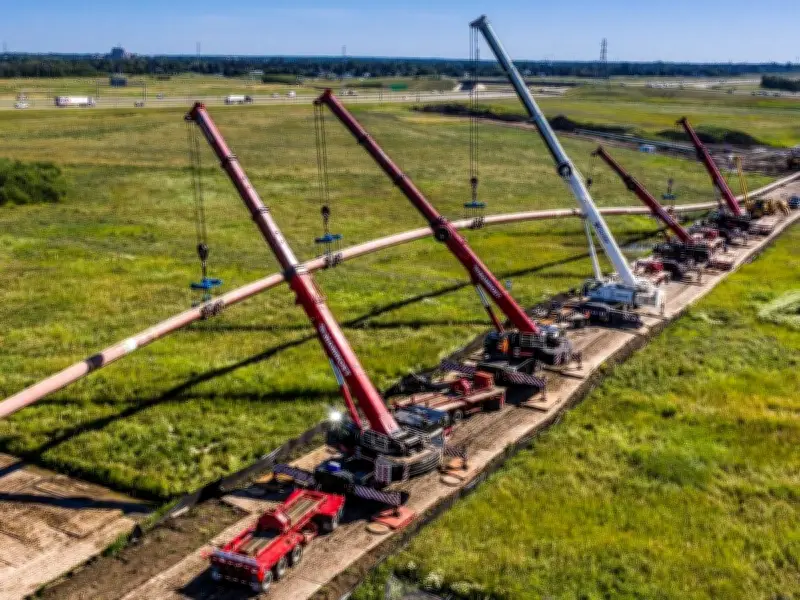
Alberta is poised to submit a broad, non-specific oil pipeline proposal to the British Columbia coast by the July 1 deadline, according to project observers who anticipate a plan lacking industry backing, a defined route, or concrete details. The submission, mandated by Premier Danielle Smith and Prime Minister Mark Carney, aims to expedite a one-million-barrel-per-day pipeline through the federal government’s major projects office to diversify Canadian exports away from the U.S. amid President Trump’s tariffs.
Alberta’s Proposal Expected to Lack Substance
Amy Janzwood, an assistant professor in political science at McGill University’s Bieler School of the Environment, stated she expects the July 1 announcement from Smith to contain few substantive elements typical of regular project submissions to the Canada Energy Regulator. These include a designated company to build the pipeline, oil producer support, baseline studies, or a detailed route. “We are really going off book in terms of what a proposal … requires at this stage. So I’m expecting there to be very little substance,” said Janzwood, author of the 2025 book Mega Pipelines, Mega Resistance: Tar Sands, Social Movements, and the Politics of Energy Infrastructure.
Janzwood noted that it is politically advantageous for the Smith government to create a flashy headline declaring the need for an energy corridor, but the proposal itself will likely be extremely light on details. The Alberta government has indicated it will put forward a general corridor plan rather than a specific route.

Political and Industry Skepticism
Smith has strongly pushed for the pipeline to help diversify exports to Asian markets and as a signal that Ottawa is responding to Alberta’s interests. She has not endorsed Alberta separating from Canada but has placed a question on a referendum this fall allowing voters to choose to remain a province or commence the legal process for a future binding separation vote. Smith’s hoped-for timeline includes federal designation of the project as in the national interest by the end of the year and construction starting as early as fall 2027.
However, industry observers have been skeptical, noting there is no industry backing and other pipeline projects already ready to go total more than one million barrels. If the project goes through northern B.C., which Alberta continues to indicate it prefers, the federal government would need to remove a tanker ban, which coastal First Nations staunchly oppose.
B.C. Premier Opposes Pipeline
B.C. Premier David Eby has not been supportive of a new oil pipeline to the northwest B.C. coast, saying it would put at risk liquefied natural gas and critical mineral projects that have First Nations support. Janzwood observed that the pipeline is “really just used as a way to continue to push for everything else that the Smith government has been quite relentlessly demanding from the federal government in terms of rollback of existing climate policy.”