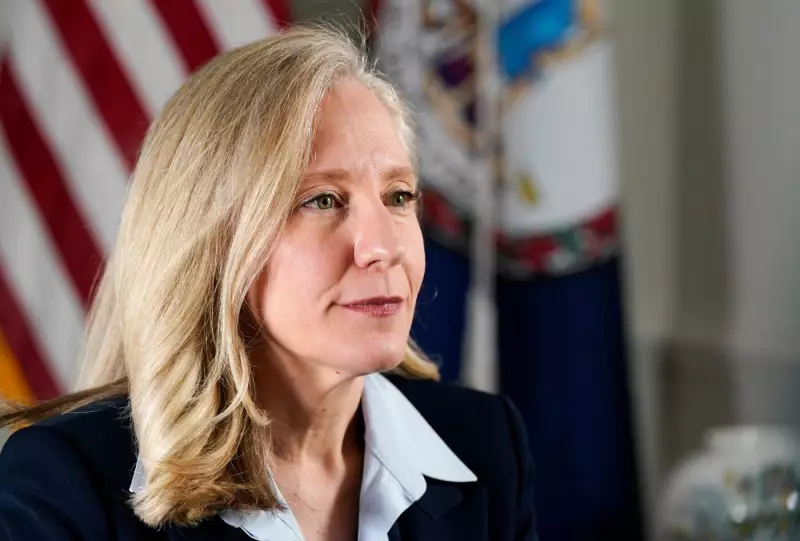
Virginia entered a new chapter in its political history on Saturday, January 17, 2026, as Abigail Spanberger was sworn in as the state's chief executive. This inauguration ceremony marked a historic milestone, making Spanberger the first woman ever to serve as governor of Virginia.
A Historic Day in Richmond
The inauguration took place in Richmond, the state capital, with the ceremony beginning at 8:05 AM Eastern Standard Time. Spanberger, previously the governor-elect, took the oath of office, officially assuming the role and responsibilities she campaigned for. The event was covered by The Associated Press, which captured images of Spanberger at the Capitol in the days leading up to the historic moment, including during an interview on Tuesday, January 6, 2026.
This breakthrough ends Virginia's status as one of the U.S. states that had never elected a woman to its highest office. The moment is seen as a significant shift in the political landscape of a state with a long and complex history.

The Path to the Governor's Mansion
Abigail Spanberger's journey to the governor's mansion involved a detailed campaign and a clear electoral victory. Her interview at the Capitol just days before the inauguration, documented by AP photographer Steve Helber, showed her preparing for the transition of power. The visual record of her in the Capitol building underscored the imminent change in leadership.
While the original news brief did not detail her political party or specific policy platforms, the core fact of her gender-breaking victory stands as the central, transformative detail of this political event.
Significance and National Context
The inauguration of a first female governor is always a moment of symbolic and practical importance. For Virginia, this event places it on a growing list of states that have shattered this particular glass ceiling. It signals evolving voter attitudes and opens the door for future candidates.
The timing of the inauguration, in mid-January 2026, aligns with traditional gubernatorial inauguration schedules. As the new governor, Spanberger now faces the task of governing a major state, with all the attendant challenges and opportunities that come with being a historic "first." Her administration will be watched closely, both for its policy directions and for how it navigates this landmark role.
This historic event in Virginia politics serves as a reminder of the changing face of leadership in North America, a trend observable in Canadian politics as well, where representation continues to evolve at federal, provincial, and municipal levels.