
Toronto's Weak Economy Key to Canada's Dismal Growth
Toronto's poor economic performance, including weak income growth and high unemployment, is central to Canada's two-decade economic malaise, analysts argue.


Toronto's poor economic performance, including weak income growth and high unemployment, is central to Canada's two-decade economic malaise, analysts argue.
After a volatile week of economic data, experts weigh in on whether Canada faces a recession or if concerns are overstated for political gain.

Readers discuss Canada's economic challenges under Mark Carney and the controversy over criminalizing residential school denialism.
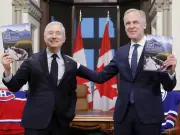
Prime Minister Mark Carney has exceeded his budget twice in seven months, with overspending reaching $12 billion, contradicting his campaign promises to curb federal spending.

Shared lists with real-time sync. No signup needed — just open and shop together.
Recommended
Rob Breakenridge argues Alberta's potential separation would harm Canada's economy more than Quebec's, citing a new poll and economic factors.

Prime Minister Mark Carney faces mounting pressure as Canada enters a 'technical' recession and U.S. President Trump warns of a potential recession, sparking political and economic debate.

Mark Carney promotes Groceries and Essentials Benefit, but critics say it shows economic failure. Average families not helped as food prices soar.
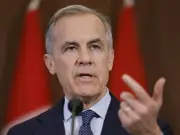
Parliamentary Budget Officer report shows federal deficits will average $4.6 billion higher annually over five years than the Carney government projected in April.

Lorne Gunter criticizes Alberta Prosperity Project for flippant response to Premier Smith's $400B separation cost estimate, demanding transparent numbers.
Shared lists with real-time sync. No signup needed — just open and shop together.
Recommended
World Cup costs in Canada have surged to $1 billion, with Vancouver's share rising from $230M to $729M. Carson Binda calls overruns 'outrageous' and says tourism benefits not materializing.
Canada's economy shows signs of a technical recession with two consecutive quarterly declines, job losses, and weak business investment, despite resilient consumer spending.

The Mark Carney government drops the 15-25% streaming revenue requirement for Canadian content, opting for a $600M direct subsidy, avoiding trade friction.

Today's top stories: Canada calls for CUSMA renewal, retirement planning challenges, late tax-filing case, Zellers expands in Ontario, and productivity falls.

Premier Danielle Smith proposes an Alberta-Quebec economic partnership to boost growth, strengthen supply chains, and enhance national unity amid trade uncertainties.
Shared lists with real-time sync. No signup needed — just open and shop together.
Recommended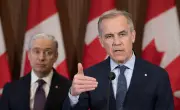
Canada enters a technical recession after two quarters of negative GDP growth. Economist Kiefer Van Mulligen explains the implications for consumers and the economy.
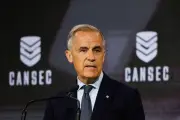
Lorne Gunter argues Canada's recession stems from a decade of Liberal anti-growth policies, not just U.S. tariffs, with weak GDP, rising unemployment, and poor innovation.
The Century Initiative, once championing 100 million population by 2100, now admits high migration rates have strained Canada's carrying capacity and happiness index.

A new Fraser Institute study shows Alberta leads Canada in interprovincial migration, attracting over half a million net newcomers since 1995.
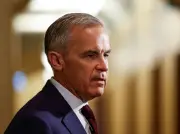
Prime Minister Mark Carney says economic data will be volatile as Canada dips into a technical recession, citing government policies and U.S. tariffs.
Shared lists with real-time sync. No signup needed — just open and shop together.
Recommended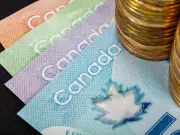
Canada's GDP contracted for two quarters, but experts say it's not a recession yet. Stalled growth, trade disruptions, and energy costs pose risks.
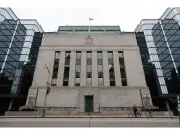
Bank of Canada Senior Deputy Governor Carolyn Rogers warns against concluding a recession based solely on two quarters of GDP contraction, urging consideration of broader economic data.

Canada's real GDP contracted for two consecutive quarters, signaling a potential recession. Economist David Rosenberg warns the Bank of Canada against rate hikes amid a weakening labor market and falling inflation.

Readers criticize Trudeau's debt legacy and Carney's budget, while another highlights Singapore's strict spitting laws.

Conservative leader Pierre Poilievre demands an emergency debate on Canada's economy, citing urgent concerns over inflation and cost of living.
Shared lists with real-time sync. No signup needed — just open and shop together.
Recommended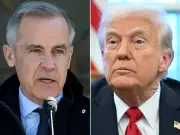
Canada's economy contracted 0.1% annually in Q1 2026, entering a technical recession due to the ongoing trade war with the US under President Trump.
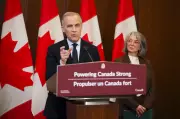
Prime Minister Mark Carney and Environment Minister Julie Dabrusin face increasing calls to demonstrate how current policies are affecting Canada's greenhouse gas emissions.

Alberta's separation debate overlooks crucial financial issues like CPP, deposit insurance, mortgages, registered accounts, and taxes that affect residents directly.
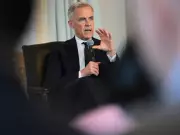
Prime Minister Mark Carney speaks at the Economic Club of New York, addressing Canada's economic strategy and international partnerships amid trade tensions.

Mark Carney's pledge to help 'make America great again' faces criticism as Canada enters a recession with rising unemployment and inflation.
Shared lists with real-time sync. No signup needed — just open and shop together.
Recommended
Canada's GDP unexpectedly contracted in Q1 2026, meeting technical recession definition. Scotiabank buys Texas bank. Costco to return tariff refunds. Retirement planning for a 61-year-old.
