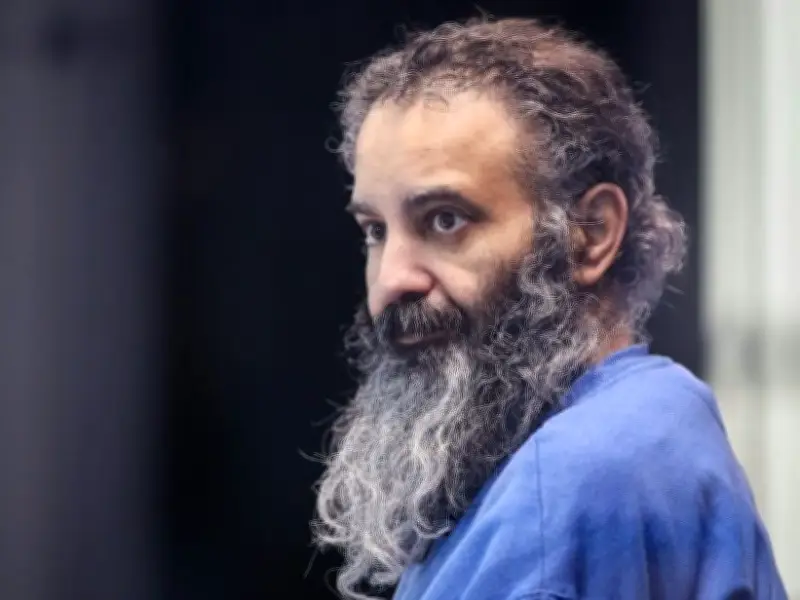
A German court on Friday convicted Saudi psychiatrist Taleb Jawad al-Abdulmohsen and sentenced him to life in prison for driving an SUV through a crowded Christmas market in Magdeburg in 2024, killing six people and injuring more than 300.
The court in Magdeburg ruled that the crime was of “particular severity,” a designation that will make it much harder for Abdulmohsen to ever win release from prison. The 51-year-old anti-Islam activist admitted to driving the rented BMW X3 compact SUV with over 340 horsepower through the historic central market square on December 20, 2024, but denied deliberately running people over. Prosecutors described that claim as preposterous.
Attack and victims
According to the indictment, Abdulmohsen reached a speed of 48 kilometres per hour during the rampage that killed a nine-year-old boy and five women aged between 45 and 75. He was arrested as he emerged from the badly damaged vehicle and was charged with six counts of murder and 338 counts of attempted murder. The attack “defies human comprehension” and has left the families of victims with “simply indescribable” suffering, prosecutor Matthias Boettcher said during closing arguments.

Trial and security measures
The months-long trial required the construction of a massive temporary courtroom on the outskirts of Magdeburg to accommodate the hundreds of victims, relatives, and others. More than 100 witnesses and around 40 lawyers representing 200 civil parties to the case appeared during the proceedings. A psychiatric expert diagnosed the accused with narcissistic personality disorder but found that he is fully criminally responsible and remains dangerous.
Thomas Klaus, a lawyer representing more than 100 victims or their relatives, told AFP before the verdict that it was “expected that he will, in fact, serve this sentence for the rest of his life.”
Motive and background
The car-ramming, one of a series of deadly attacks committed by foreign nationals in recent years, intensified a highly charged debate over immigration in the midst of a national election campaign. Magdeburg’s Christmas market opened a year later with concrete blocks and armed police protecting the square, with some visitors telling AFP they felt it now resembled a fortress.
The use of a vehicle evoked jihadist attacks of recent years, but police digging into Abdulmohsen’s background quickly discovered a very different motivation — an intense anti-Islam stance and sympathy for far-right politics, including the anti-immigrant Alternative for Germany (AfD) party. His testimony in court was sometimes incoherent and riddled with conspiracy theories and fringe far-right ideas. He staged a hunger strike that forced the court to continue the trial without him for a time.
The doctor, who arrived in Germany in 2006, had previously accused German authorities of failing to adequately protect Saudis fleeing their country for religious or political reasons. He had previous run-ins with authorities and had been fined for making threats of criminal violence. According to Boettcher, Abdulmohsen’s motive lay in a conflict with a Cologne-based refugee organisation against which he had lost a civil suit. He sought “revenge” for the court defeat and a series of unsuccessful criminal complaints, and wanted to “continue to attract public and media attention,” the prosecutor argued. He said that during the trial Abdulmohsen showed “no remorse, regret or introspection whatsoever.”