North Korea Conducts Engine Test for Missile Capable of Targeting U.S. Mainland
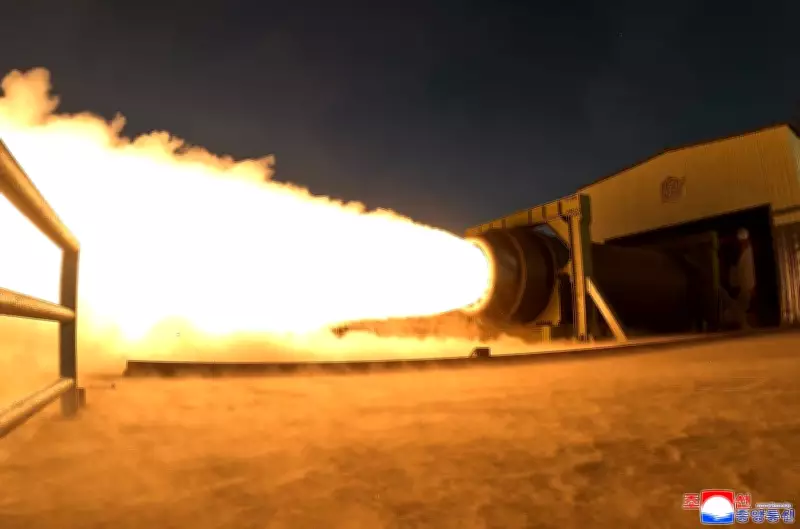
North Korea has reportedly conducted a significant engine test for a missile system designed to target the United States mainland, according to state media reports released on March 29, 2026. The test involved a solid-fuel engine, which represents a critical advancement in Pyongyang's ballistic missile capabilities.
Details of the Engine Test
The Korean Central News Agency (KCNA) distributed undated photographs showing what it described as a solid-fuel engine test at an undisclosed location within North Korea. Solid-fuel technology allows missiles to be launched more quickly and with less preparation time compared to liquid-fuel systems, making detection and interception more challenging for defense systems.
Independent journalists were not granted access to verify the event depicted in the images. The photographs contained a Korean language watermark reading "KCNA," identifying the source as North Korea's official news agency. The content of these images cannot be independently authenticated due to the restricted nature of the event.

Strategic Implications for Regional Security
This engine test signals a concerning escalation in North Korea's weapons development program. Missiles equipped with solid-fuel engines pose a greater threat because they can be:
- Deployed more rapidly from mobile launchers
- Fired with minimal warning time
- Stored for extended periods while remaining operational
The specific missile system referenced in the test appears capable of reaching the continental United States, representing a direct challenge to American national security interests and regional stability in Northeast Asia.
Verification Challenges and International Response
The lack of independent verification complicates international assessment of North Korea's actual technological progress. However, weapons experts note that consistent testing of solid-fuel systems suggests Pyongyang is making measurable advancements in its long-range strike capabilities.
This development comes amid ongoing tensions on the Korean Peninsula and raises questions about the effectiveness of current diplomatic efforts to curb North Korea's weapons programs. Regional powers, including South Korea, Japan, and the United States, are likely to monitor this situation closely and may consider enhanced defensive measures in response.
The engine test represents another step in North Korea's persistent efforts to develop reliable delivery systems for its nuclear arsenal, despite international sanctions and diplomatic pressure.