

Mexican Security Forces Eliminate Powerful Cartel Leader in Major Operation
In a significant development in Mexico's ongoing war against organized crime, federal authorities have confirmed the death of Nemesio Rubén Oseguera Cervantes, the notorious leader of the Jalisco New Generation Cartel, during a targeted raid in the western state of Jalisco. The operation, which occurred on Sunday morning, has ignited violent clashes across multiple regions of the country while drawing commendation from United States officials who view the strike as a critical advancement in bilateral security efforts.
The Demise of El Mencho and Immediate Aftermath
According to official statements from Mexico's government, Oseguera—infamously known by his alias "El Mencho"—was killed alongside six other cartel members during the federal operation or in its immediate aftermath. The defense ministry reported that three soldiers sustained injuries during the confrontation, which utilized intelligence provided by U.S. agencies. Authorities seized an arsenal of sophisticated weaponry, including rocket launchers described as capable of downing aircraft and destroying armored vehicles, highlighting the cartel's formidable military capabilities.
Oseguera rose to prominence after helping establish the Jalisco Cartel around 2009, transforming it from a rival to the Sinaloa Cartel into one of Mexico's primary drug trafficking organizations. The group has been instrumental in smuggling cocaine, methamphetamine, and fentanyl into the United States, making Oseguera's elimination a substantial political victory for Mexico amid increasing pressure from U.S. leadership to curb narcotics flows.

Violent Retaliation and Security Measures
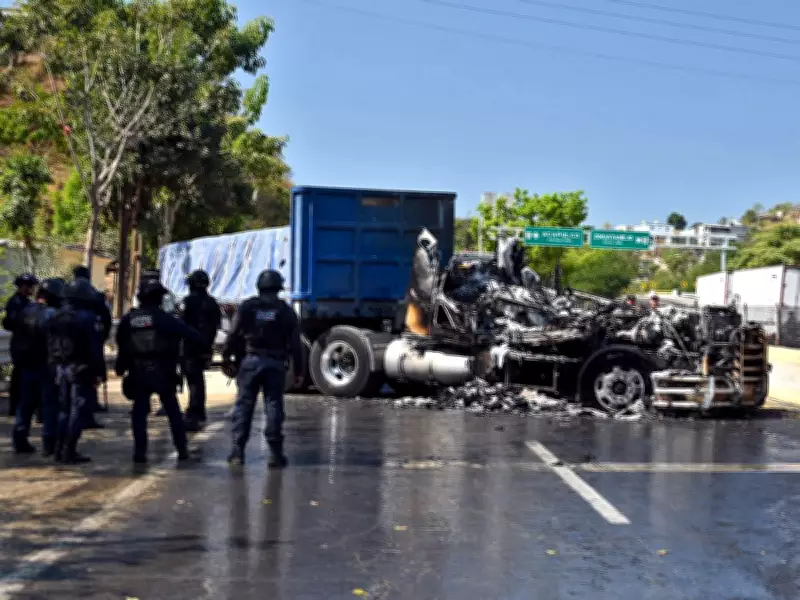
Following the raid, criminal factions associated with the cartel launched coordinated retaliatory attacks across Jalisco, setting vehicles ablaze to block major roadways and engaging in armed confrontations with security forces. Local media outlets Reforma and Milenio, which first reported Oseguera's death, documented these disturbances, including incidents in Guadalajara—a host city for the upcoming 2026 FIFA World Cup—where armed groups shot out car tires to obstruct intersections.
The violence prompted immediate security responses: the state government canceled all public activities through Monday, including school classes, and suspended public transit in affected areas. Business organization Coparmex advised residents to remain indoors, while security officials confirmed that 20 branches of the state-run Banco del Bienestar were impacted by the unrest.
Government Response and International Reactions
Mexican President Claudia Sheinbaum praised the officials involved in the operation, emphasizing that most regions of Mexico remained unaffected by the raid due to coordinated efforts among state governments. In a social media post, Sheinbaum urged citizens to "stay informed and remain calm" while acknowledging persistent road blockades. She is scheduled to provide a detailed assessment of the operation's ramifications during her Monday press conference.
From the United States, Deputy Secretary of State Christopher Landau—formerly the ambassador to Mexico—hailed the kingpin's killing as a transformative achievement for regional security. "This is a great development for Mexico, the U.S., Latin America, and the world," Landau stated in a public post. "The good guys are stronger than the bad guys." This endorsement underscores the strategic importance of the operation in the context of international drug enforcement collaboration.
The elimination of El Mencho represents a pivotal moment in Mexico's complex struggle against cartel violence, demonstrating both the potential for decisive action and the persistent challenges of managing retaliatory unrest. As authorities continue to assess the long-term implications, the incident highlights the intricate balance between security operations and civilian safety in regions dominated by organized crime.






