Iran Launches Coordinated Military Strikes in Gulf Region
In a significant escalation of regional tensions, Iran executed targeted military operations overnight, striking Kuwait's primary international airport and a commercial liquefied petroleum gas (LPG) tanker near the coast of Qatar. Concurrently, the Iranian capital of Tehran endured a series of bombardments, creating a volatile atmosphere just hours before a planned address by former United States President Donald Trump.
Dual Front Attacks Disrupt Gulf Stability
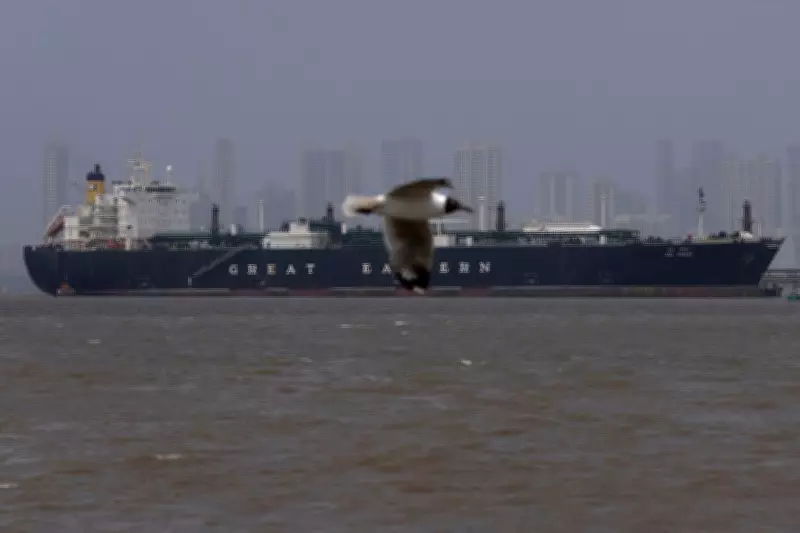
The attacks mark a bold and coordinated maneuver by Iranian forces, demonstrating their capability to project power across multiple fronts simultaneously. The assault on Kuwait's airport involved precision strikes that caused substantial damage to infrastructure, disrupting air travel and raising immediate security concerns across the Gulf Cooperation Council (GCC) states. Meanwhile, in the waters off Qatar, the Indian-flagged LPG carrier Jag Vasant was targeted while transporting liquefied petroleum gas. The vessel had recently navigated the strategically vital Strait of Hormuz, a chokepoint for global energy shipments, underscoring the attack's implications for international maritime security and energy supply chains.
Tehran Under Fire Amid Political Tensions
As these external strikes unfolded, Tehran itself became a target, subjected to a barrage of bombardments whose origin remains under investigation. This internal attack adds a layer of complexity to the situation, suggesting either external retaliation or internal factional conflict within Iran's borders. The timing is particularly sensitive, occurring on the eve of a scheduled speech by Donald Trump, whose previous administration adopted a hardline stance against Iran, including the withdrawal from the nuclear deal and the assassination of General Qasem Soleimani. Analysts suggest the strikes may be a calculated show of force intended to project strength and deterrence ahead of potential political pronouncements from Washington.

Regional and Global Repercussions
The immediate aftermath has seen a dramatic spike in regional anxiety, with neighboring countries heightening their defensive postures. The targeting of critical infrastructure like an international airport and a commercial energy vessel signals a dangerous shift towards economic and logistical warfare, potentially destabilizing not only regional security but also global energy markets. The international community, including the United Nations and key Western powers, is expected to issue strong condemnations and calls for de-escalation. However, the dual nature of the attacks—both outward aggression and inward vulnerability—presents a multifaceted crisis that complicates diplomatic responses and raises the specter of a broader regional conflict.
Further developments are anticipated as details emerge regarding casualty figures, the extent of the damage, and the official responses from the governments of Iran, Kuwait, Qatar, and other stakeholders. The situation remains fluid, with the potential for rapid escalation depending on subsequent military and political actions in the coming hours and days.