

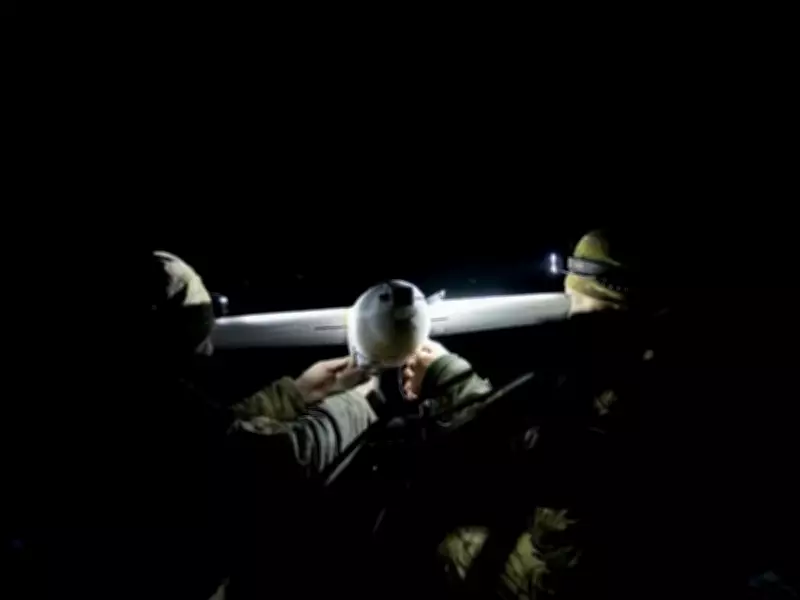
Drones Transform Ukraine Battlefield into High-Tech 'Kill Zone'
As the conflict in Ukraine enters its fifth year, unmanned aerial vehicles have fundamentally reshaped frontline combat, creating what military experts describe as a lethal 'kill zone' where traditional warfare tactics have become obsolete. This technological revolution in modern warfare is being closely monitored by military strategists worldwide.
Drone Dominance on the Front Lines
Ukrainian Defence Minister Mykhailo Fedorov has stated that drones are now responsible for up to 80 percent of battlefield damage, ranging from inexpensive commercial devices adapted for military use to sophisticated explosive-packed miniature aircraft. "Modern warfare is now impossible without drones," explained Koleso, a Ukrainian infantry soldier serving in eastern Ukraine.
The front line has been transformed into a deadly area stretching up to 20 kilometers deep where nothing can survive without detection. Military expert Kateryna Bondar described this zone as "an area between two sides where nothing can survive because it's constantly monitored by drones." Soldiers must operate in small, fast-moving groups with their eyes fixed skyward, hoping to avoid detection.

Technological Arms Race Intensifies
The communication systems controlling these drones have become a critical battleground. "That's where the real race is happening — communications and connections," Bondar emphasized. Initially relying on vulnerable radio connections susceptible to electronic warfare jamming, both sides have developed more resilient alternatives.
Russian forces have increasingly turned to drones controlled by ultra-thin fiber-optic cables, which are largely immune to electronic interference. This technological shift has created surreal battlefield landscapes where frontline cities and fields are entangled in webs of cable resembling scenes from dystopian science fiction films.
Satellite Technology Enters the Fray
Ukrainian forces have pioneered another technological solution by attaching Starlink satellite internet terminals to drones, allowing for stable long-distance control and video transmission. "We need to fly far away with a stable video signal and stable control," explained Phoenix, a commander from Ukraine's Lasar Group, which helped develop this approach.
Russian troops soon began copying the technique until Ukraine successfully pressured Elon Musk's SpaceX to disable unauthorized Russian terminals last month. According to military observers, this disruption affected both sides' systems temporarily. The U.S.-based Institute for the Study of War suggested the Starlink shutdown likely contributed to a localized but rapid Ukrainian advance in the southern Zaporizhzhia region during early February.
Ground Drones Support Frontline Operations
Unwilling to risk unnecessary human casualties in the deadly kill zones, Ukrainian troops have deployed ground drones to transport supplies to dangerous areas and evacuate wounded soldiers. This innovation represents just one aspect of how unmanned systems are transforming every element of battlefield logistics and combat operations.
Heavy artillery pieces, tanks, and armored vehicles have become increasingly vulnerable in this new warfare environment due to their slow movement and high visibility, making them easy targets for drone operators on both sides of the conflict.






