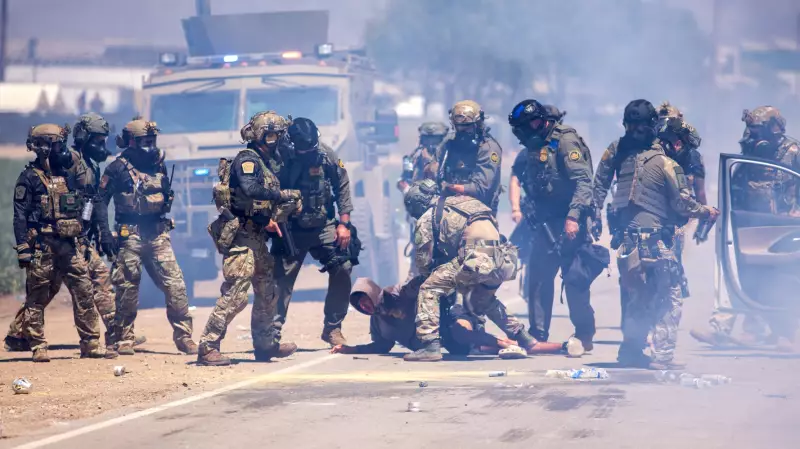
In a significant shift, U.S. Customs and Border Protection (CBP) is mandating that many of its officers undergo advanced crowd-control training, according to an internal memo obtained by HuffPost. This move signals an expansion of the agency's role beyond borders and ports of entry into managing domestic civil unrest, particularly amid volatile protests in Minneapolis.
Expanding Mission with Advanced Training
The directive requires numerous current CBP employees to achieve a higher certification in "mobile field force training." This intensive, three-day program prepares personnel for civil disturbances—a scenario not typical at ports but increasingly common in the Trump administration's interior immigration operations. The training is a prerequisite for using certain chemical munitions, meaning more officers could be authorized to deploy pepper balls and tear gas canisters, not just pepper spray, upon completing additional certifications.
Leadership has instructed field offices to implement this training swiftly. The goal is to enable CBP employees to be deployed into more volatile situations alongside other law enforcement agencies. This change underscores how President Donald Trump is steering the agency, part of the Department of Homeland Security (DHS), toward his aggressive interior immigration crackdown.

Training Push Amid Minneapolis Unrest
This policy shift occurs as Minneapolis is engulfed in protests following the police shooting of Renee Good, a 37-year-old mother of three, by an Immigration and Customs Enforcement (ICE) officer last week. The administration claims Good "weaponized" her car and the agent acted in self-defense, though video appears to show her turning the vehicle away as he fired.
Good's death and viral videos of federal agents pulling people from cars have sparked nationwide demonstrations. The Trump administration has responded by sending hundreds of additional ICE and CBP officers to the Twin Cities. President Trump has even threatened to invoke the Insurrection Act and deploy the U.S. military to Minnesota.
Gil Kerlikowske, former CBP commissioner under President Barack Obama, told HuffPost the new training requirement indicates the agency "don't intend to back off" on deportations and want "a little better skillset" for crowds. He criticized the agency's preparedness, citing incidents of "shootings inside vehicles" and "tossing tear gas."
Broader Implications and Criticism
While recent CBP recruits already take the advanced course, many existing personnel hold only a lower certification. The new mandate would certify everyone, including desk-bound supervisors, for large demonstrations. This reflects a blurring of traditional roles within DHS. Historically, inland enforcement fell to ICE, but CBP and Border Patrol agents are now heavily enlisted for deportation raids. A 2024 report indicated around 2,000 CBP and Border Patrol agents were diverted from ports and borders to assist ICE, potentially hampering drug and human trafficking interdiction.
The administration faces sharp criticism for its aggressive tactics. In November, a federal judge issued an injunction restricting federal agents' crowd-control methods after finding their use of force during Chicago protests violated constitutional rights and "shocked the conscience."
Minneapolis Mayor Jacob Frey condemned the influx of federal agents, saying it was "causing chaos" and creating an "impossible situation" for the city. This is not the first time CBP has been used for domestic protest control; they were deployed during the 2020 racial justice protests following George Floyd's killing. Internal concerns were raised then about putting officers in "direct contact" with the public without proper training.
The Department of Homeland Security did not immediately respond to a request for comment on Friday.