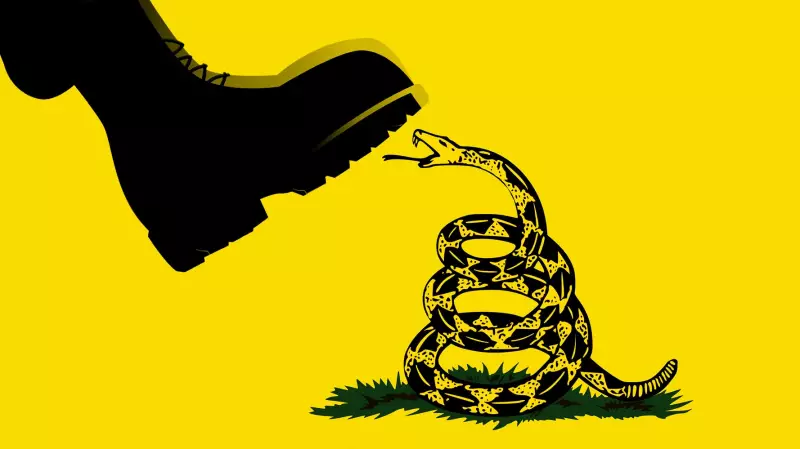
The fatal shooting of Minneapolis resident Renee Good by an Immigration and Customs Enforcement (ICE) officer on January 7 has ignited a firestorm, revealing a stark new rhetoric from the Trump administration and its allies: comply or face deadly consequences.
A Fatal Encounter and a Justification of Force
On January 7, ICE officer Jonathan Ross shot and killed Renee Good. In the days that followed, the official narrative from the highest levels of government shifted from claiming she posed a threat to suggesting her attitude was to blame. President Donald Trump stated on Sunday that Good and her companion were "highly disrespectful of law enforcement" and that officers "should not be in a position where they have to put up with this stuff." This framing positioned disrespect, not an imminent physical threat, as a potential justification for lethal force.
This message was amplified by Republican lawmakers in explicit terms. Representative Wesley Hunt (R-Texas) declared on Newsmax, "when a federal officer gives you instructions, you abide by them and then you get to keep your life." Similarly, Rep. Randy Fine (R-Fla.) said on January 8, "If you impede the actions of our law enforcement... you get what’s coming to you. I do not feel bad for the woman that was involved."

Escalating Threats on the Ground in Minneapolis
This rhetoric has demonstrably trickled down to ICE officers operating in Minneapolis, leading to escalated intimidation and violence against residents in the week following Good's death. Legal observers and citizens filming encounters reported direct threats referencing the killing.
In one incident, an officer screamed at a legal observer, "Did you not learn from what just happened?" In another, a woman filming was allegedly told, "Is this how you want to die with a fucking bullet in your skull?" before being handcuffed and brutalized until she lost consciousness, according to her account on KCCO radio.
Patty O’Keefe, a U.S. citizen detained after following an ICE vehicle, reported officers taunted her with Good's death. "The ICE agent... said 'you guys gotta stop obstructing us, that’s why that lesbian b***h is dead,'" O’Keefe told Minnesota Public Radio. These actions occur despite the basic constitutional rights to protest, film, or criticize law enforcement.
The Broader Campaign to Redefine Political Exclusion
Analysts see this incident as part of a larger attempt to redefine who is protected within the American political community. The Trump administration and its allies have increasingly used dehumanizing language to describe opponents, casting liberals, progressives, and activists as "unhumans," "domestic terrorists," or "paid agitators."
Far-right influencer Matt Walsh labeled Good a "race traitor" for defending immigrants. This rhetoric seeks to exclude political opponents from the protections of law and civility. Vice President JD Vance endorsed the book "Unhumans," which frames the left as barbarians requiring violent repression.
This ideological shift was summarized by Kevin Roberts of the Heritage Foundation, who spoke of a "second American Revolution" that would remain "bloodless if the left allows it to be." The message from top to bottom is clear: submission is demanded, and resistance could be met with fatal violence.
Despite this aggressive posture, the people of Minneapolis continue to protest. As one demonstrator put it in the wake of Good's death, "You can't kill us all," signaling a public refusal to accept a paradigm where dissent is answered with death.