




Historic Presidential Attendance at Supreme Court Hearing
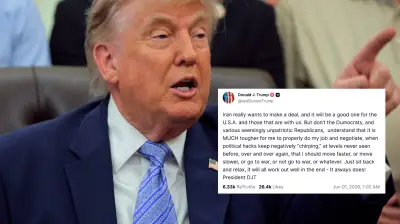
President Donald Trump made history on Wednesday by becoming the first sitting president to attend a Supreme Court argument in person. His presence provided a front-row view as justices, including three of his own appointees, critically examined his administration's attempt to restrict birthright citizenship for children of parents without legal immigration status.
Executive Order Faces Judicial Scrutiny
On his first day back in office last year, Trump issued an executive order that would end birthright citizenship for children of undocumented immigrants and temporary residents, with implementation scheduled for February 20, 2025. The case before the court, Trump v. Barbara, emerged from multiple legal challenges to this order, which has never taken effect because every court that has reviewed it has ruled against the administration.
The Supreme Court arguments appeared to follow the same pattern as previous lower court proceedings, with both liberal and conservative justices expressing skepticism toward the Trump administration's position. The justices approached the administration's interpretation of the 14th Amendment's birthright citizenship clause with visible bewilderment, exasperation, and even irritation.
Administration's Legal Argument Meets Resistance
Solicitor General D. John Sauer presented the administration's case, arguing that the 14th Amendment's birthright citizenship clause and subsequent court precedents should limit citizenship at birth to children of parents "domiciled" in the United States. According to the administration's interpretation, establishing domicile requires a person to owe "allegiance" to the U.S. while intending to remain in the country permanently—conditions they claim undocumented immigrants and temporary visitors cannot fulfill.
This novel interpretation, which has never been accepted by any court or previous administration, encountered immediate difficulties during questioning.
Justices Question Legal Foundation
Chief Justice John Roberts characterized the examples Sauer offered to justify redefining birthright citizenship as "very quirky" and questioned how these "tiny and idiosyncratic examples" could be extrapolated to apply to the broader population of undocumented immigrants.
Justice Neil Gorsuch expressed evident disdain when noting Sauer's reliance on "Roman law sources" to support the administration's argument. Gorsuch further cautioned Sauer about relying too heavily on U.S. v. Wong Kim Ark, the landmark 1898 decision that first affirmed birthright citizenship applies to children of noncitizens.
Historical Precedent Undermines Administration Position
The Wong Kim Ark decision featured prominently throughout the arguments, as it represents the established interpretation of birthright citizenship that has been acknowledged for over a century. Justice Sonia Sotomayor pointed out that this precedent directly contradicts the administration's argument about domicile and allegiance, noting that Wong's parents returned to China when he was a child and never came back to the United States, yet he retained his birthright citizenship when he returned.
Constitutional Text and Intent Examined
Justice Amy Coney Barrett criticized Sauer's argument as "not textual," explaining that if parents needed to demonstrate allegiance and intent to remain in the U.S. for their children to qualify for birthright citizenship, this would exclude large groups the 14th Amendment was meant to protect. Barrett cited historical examples including children of enslaved people brought illegally to the U.S. after the slave trade was banned, as well as contemporary situations involving undocumented immigrants trafficked against their will or children with unknown parentage.
When Sauer attempted to discuss how the law treats children with unknown parentage, Barrett interrupted with, "Yeah, yeah, yeah, but what about the Constitution?"
Chief Justice Questions Relevance of Arguments
Chief Justice Roberts delivered particularly pointed questioning when he asked Sauer about the relevance of stories about birth tourism included in the administration's opening argument. "You do agree that has no impact on the legal analysis before us," Roberts stated.
Sauer responded with an extended explanation about how the authors of the 14th Amendment couldn't have anticipated current circumstances, describing a "new world where 8 billion people are one plane ride away from having a child who's a U.S. citizen."
Roberts countered succinctly: "It's a new world, but it's the same Constitution."
Outside the Supreme Court building, demonstrators rallied in support of birthright citizenship as the historic proceedings unfolded inside. The case represents a significant constitutional test of presidential authority to reinterpret long-standing interpretations of citizenship rights through executive action.