

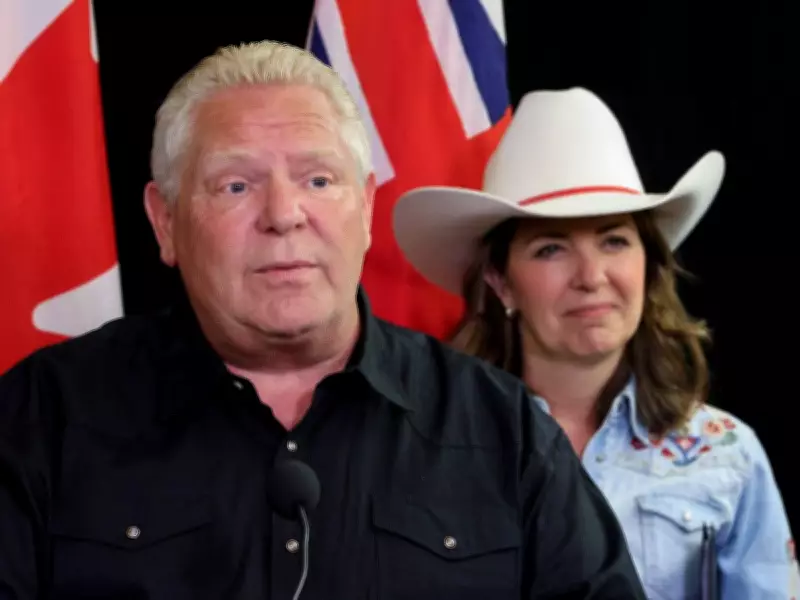
Four Provincial Leaders Demand Greater Role in Federal Judicial Appointments
Four premiers from across Canada have formally requested increased involvement in the federal judicial appointment process, marking a significant development in intergovernmental relations. Alberta Premier Danielle Smith, Saskatchewan Premier Scott Moe, Ontario Premier Doug Ford, and Quebec Premier François Legault jointly signed a letter addressed to Prime Minister Mark Carney, advocating for a more collaborative approach to filling judicial positions in their respective provinces.
A Call for Collaborative Reform
The premiers' letter, released on Tuesday, specifically calls for judicial appointments to courts of appeal and superior trial courts to be selected from candidates recommended by provincial governments. "We are calling for a new, collaborative approach, wherein our governments can meaningfully engage in filling judicial positions in our respective jurisdictions," the document states. The letter emphasizes that this reform would apply not only to provincial superior courts but also to appointments to the Supreme Court of Canada.
The provincial leaders argue that their increased participation would promote what they describe as "open and cooperative federalism" while strengthening public confidence in the judicial system. They maintain that active engagement from provincial governments would help ensure that judicial appointments appropriately reflect the diversity and unique needs of each province and territory.

Federal Response and Existing Process
Justice Minister Sean Fraser responded cautiously to the premiers' proposal, stating that his government has not changed its view that the current process is functioning effectively. "That's not something that we're considering at this point in time," Fraser told reporters on his way into a cabinet meeting on Tuesday. He emphasized that while the federal government welcomes provincial participation in the existing process, he would not commit to the premiers' specific proposal for provinces to determine the list of candidates in their jurisdictions.
Fraser explained that the current system already incorporates provincial input through judicial advisory committees established in every province and territory. "We welcome provincial governments' participation in that process and proactively reach out after we receive recommendations through the judicial advisory committees to test with our provincial counterparts whether they've got information about the reputation of the people we're considering," he said. "I found that to be very informative."
Background and Context
The premiers' request comes against a backdrop of ongoing vacancies in the federal judiciary and previous criticism of the appointment process. According to data from the Office of the Commissioner for Federal Judicial Affairs, as of March 1, 2026, there are currently 42 judicial vacancies across Canada. Ontario faces the highest number with 12 vacancies at the Superior Court of Justice and three at Family Court, while British Columbia has seven vacancies at its Supreme Court.
In 2023, the Liberal government under former prime minister Justin Trudeau faced significant criticism for perceived partisanship in its appointment process and for being too slow in filling judicial vacancies. The current premiers' proposal represents an attempt to address these concerns through greater provincial involvement.
The letter also requests that provinces and the federal government have equal access to the same information on all assessed judicial candidates, suggesting that transparency remains a key concern for the provincial leaders. Currently, provinces have the authority to appoint judges in lower courts, while the federal government retains responsibility for appointments to higher courts.
This development highlights the ongoing tension between federal and provincial jurisdictions in Canada's justice system and raises important questions about how judicial independence can be maintained while increasing provincial input in the appointment process.






