

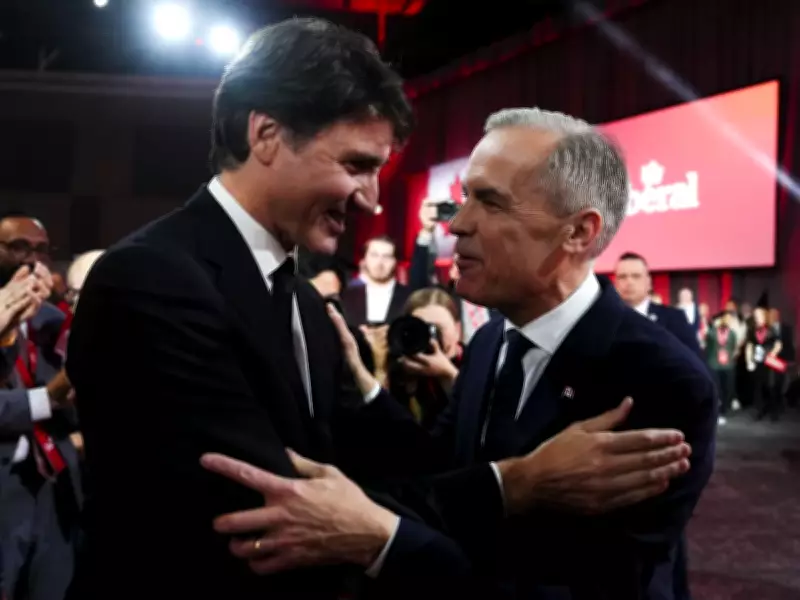
Carney Administration Moves Forward with Controversial Online Speech Regulations
The Canadian government under Prime Minister Mark Carney continues to demonstrate alignment with the policies of his predecessor Justin Trudeau, particularly regarding speech regulation and government oversight of online content. Recent developments indicate a renewed push for legislation that critics argue threatens fundamental free expression rights.
Supreme Court Appeal and Historical Context
Last week, the federal government appealed to the Supreme Court of Canada to challenge lower court rulings that declared Trudeau's 2022 invocation of the Emergencies Act unlawful. This legal maneuver coincides with renewed attention on Carney's 2022 Globe and Mail opinion piece, where he characterized Freedom Convoy protests as "sedition" and advocated for stronger government intervention.
The timing of this Supreme Court appeal suggests Carney's position on protest movements and government authority remains consistent with his previously stated views. Legal observers note this represents a continuation of the previous administration's approach to dissent and public demonstration.

Revival of Online Harms Legislation
On March 12, the government appointed Bernie Farber, founding chair emeritus of the Canadian Anti-Hate Network, to an expert advisory group on online safety. This appointment signals the administration's intention to resurrect provisions from Trudeau's online harms act, which expired when Parliament was prorogued in January 2025.
Many Canadians had expressed relief when the original online harms legislation failed to pass, viewing its disappearance as a victory for free speech protections. The proposed act contained language about protecting vulnerable groups but fundamentally represented a significant expansion of government authority over digital communication.
Controversial Provisions and Concerns
The original online harms act would have established a "digital safety commission" with extensive powers to monitor internet content and impose severe penalties for certain forms of speech. These penalties included substantial fines and even potential life imprisonment for specific violations, raising alarm among civil liberties advocates.
Critics argued the legislation created mechanisms for government censorship disguised as protective measures. The revival of these provisions under Carney's leadership confirms that his administration shares similar priorities regarding online content regulation.
Canadian Anti-Hate Network's Controversial History
Bernie Farber's organization has faced criticism for its approach to speech regulation and its targeting of specific groups. The Canadian Anti-Hate Network has regularly criticized gender critical individuals and women's rights advocates, including columnist Amy Hamm who authored the original commentary.
One CAHN board member, Richard Warman, previously launched an unsuccessful defamation lawsuit against National Post columnists Jonathan and Barbara Kay after they linked the organization to the activist group Antifa. A judge acknowledged the connection between the groups during the proceedings.
Farber has made several controversial statements in the past, including incorrectly attributing antisemitic flyers to Freedom Convoy protesters when the materials were actually distributed in Florida. He also accused Elon Musk of performing a "Nazi salute" at Donald Trump's 2025 inauguration, a claim widely criticized as unfounded.
Broader Implications for Free Expression
The appointment of Farber to a government advisory position and the revival of online harms legislation represent significant developments in Canada's approach to speech regulation. These moves suggest the Carney administration is willing to pursue controversial measures that previous governments attempted but failed to implement.
As the government prepares its case before the Supreme Court regarding the Emergencies Act and moves forward with online speech regulations, the debate over the appropriate balance between protection and censorship continues to intensify across the political spectrum.






