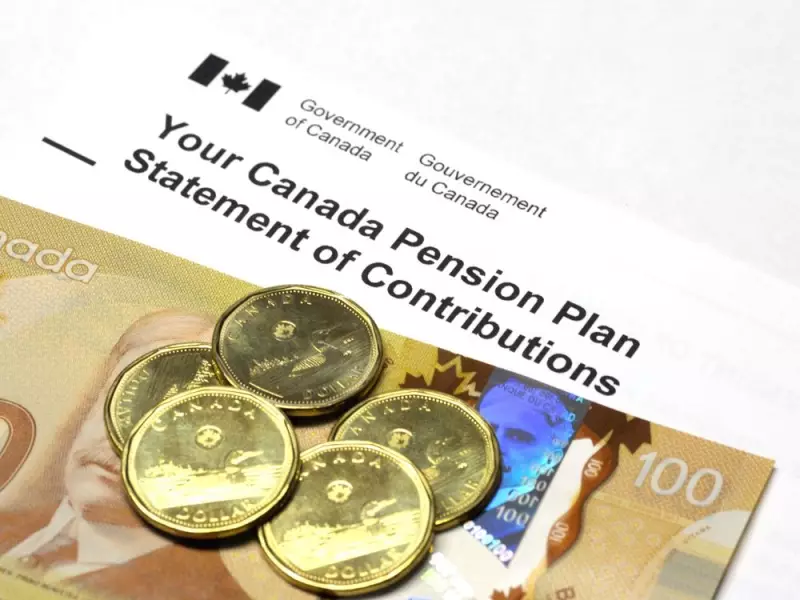
For the eighth consecutive year, Canadian workers are facing an increase in their Canada Pension Plan contributions, a move that columnist Matthew Lau argues underscores the need to dismantle the government-run retirement program entirely.
The Steady Climb of CPP Costs
In 2026, the combined employee and employer CPP contribution for someone earning $85,000 annually will reach $9,292.90. This figure includes the additional "CPP2" tier introduced in 2024. The year-over-year increase of 4.9% is more than double Canada's current inflation rate of 2.2%. Over the past eight years, the cumulative nominal tax hike for this income level has reached a staggering 79.1%, or approximately 42.1% after adjusting for inflation.
While the federal government markets these increases as a necessary "enhancement" to help Canadians save more, Lau contends this is a misrepresentation. He explains that today's workers are not building a larger personal nest egg; they are primarily funding the benefits of current retirees. Their own future payouts will depend on taxes collected from the next generation of workers, plus any investment returns generated by the Canada Pension Plan Investment Board (CPPIB).

Questionable Returns and Soaring Costs
The performance of the CPPIB, which manages the plan's funds, is a central point of criticism. Since abandoning passive index-tracking strategies for active management in 2006, the board's operational expenses have ballooned. Its staff has grown from about 150 employees to over 2,100.
This significant increase in cost has not translated to superior returns for contributors. According to the CPPIB’s Annual Report 2025, the fund achieved a net return of 9.0% over the preceding five years. However, this trailed the return of its benchmark portfolios, which was 9.7%. "Canadians have paid more to get less," Lau summarizes, highlighting the inefficiency.
The Flawed Logic of Forced Savings
Lau fundamentally challenges the premise of the CPP, which is that some citizens would not save adequately for retirement, thus justifying a mandatory program for all. He uses a pointed analogy: if some Canadians are overweight, should the government impose a "Canada Exercise Equipment" payroll tax to send treadmills to every home?
He further argues that higher CPP deductions leave workers with less disposable income to invest in Tax-Free Savings Accounts (TFSAs), Registered Retirement Savings Plans (RRSPs), and other private vehicles. This dynamic, he notes, was supported by Fraser Institute research in 2016 titled "Five Myths Behind the Push to Expand the Canada Pension Plan." The study concluded that increases in CPP contributions are typically offset by decreases in private savings, a pattern observed during earlier CPP hikes between 1996 and 2004.
The other myths the report identified include the notions that Canadians don't save enough on their own, that the CPP is low-cost, that it delivers excellent returns, and that expanding it primarily helps financially vulnerable seniors. Lau asserts that the arguments against CPP expansion have only grown stronger in the years since.
Ultimately, Matthew Lau's analysis presents a stark critique: the Canada Pension Plan, with its rising costs, subpar investment performance, and compulsory nature, is a wasteful program that diminishes workers' financial flexibility without delivering commensurate value, warranting a serious debate about its future.