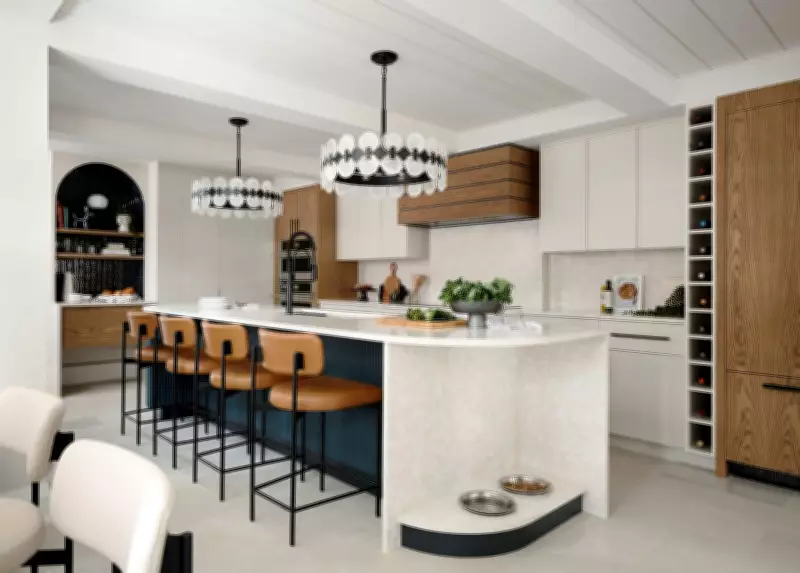
The open-concept kitchen has long been a coveted feature for homeowners, with the kitchen island traditionally serving as its central focal point. Islands can be tailored for specific functions, such as a prep station with an additional sink, a cooking center equipped with a built-in range, or a versatile hub for dining, entertaining, and even homework. However, as design trends evolve, peninsulas are making a quiet but significant comeback for numerous practical reasons.
The Rise of the Peninsula
Peninsulas offer many of the same advantages as islands, including extra workspace, seating options, and a gathering spot for family and guests. According to Cynthia Soda, founder and principal designer of Soda Pop Design Inc. in Stouffville, peninsulas often function more effectively in smaller or narrower kitchens because they are connected to the perimeter cabinetry. This connection can enhance flow and reduce spatial constraints.
"But because they're connected to the perimeter cabinetry, they often work much better in smaller or narrower kitchens," Soda explains. A key drawback of peninsulas, as noted in online research, is that they do not allow movement all the way around, which can sometimes lead to traffic congestion compared to islands.

Alternative Layouts for Compact Spaces
For those with limited kitchen space, Soda recommends considering a galley kitchen paired with a breakfast nook, a peninsula design extended for seating, or an L- or U-shaped layout combined with a small table. "It creates a more relaxed, flexible dining area that still feels connected to the kitchen. In some homes, this can actually feel more inviting and practical than a traditional island with stools," she says.
The Enduring Appeal of Islands
Despite the growing popularity of peninsulas, kitchen islands are far from obsolete. "Kitchen islands aren't disappearing; they're simply no longer the automatic answer they once were," Soda clarifies. In the past, incorporating an island—or even two—was almost an expectation in every kitchen renovation, regardless of whether it was the optimal choice. Today, there is a noticeable shift toward more deliberate and thoughtful planning.
"Designers and homeowners are asking whether an island genuinely improves how the kitchen functions, rather than assuming it's a must-have. In some kitchens, an island is still the perfect solution. In others, different layouts can create better flow and more usable storage and counter space," Soda notes.
Advantages and Limitations of Islands
Islands provide significant benefits, such as creating a natural gathering point in the kitchen, offering additional workspace, and providing casual seating. They often become the social hub of the home. However, islands also come with limitations. They are typically more expensive to install than peninsulas and require a substantial footprint to function properly. In kitchens that lack sufficient space, an island can disrupt circulation and make the room feel cramped rather than open.
"If the kitchen isn't large enough, an island can actually disrupt circulation and make the room feel cramped rather than open," Soda warns. "An island only works when the kitchen truly has the space for it—otherwise, it can create more congestion than convenience." Additionally, islands can become cluttered if not designed with adequate storage and functionality in mind.
Key Considerations for Your Kitchen Layout
The decision between an island and a peninsula is crucial, as it impacts both movement and usability in the kitchen. Soda highlights several factors to consider when making this choice:

- Circulation Space: Ensure there is enough room around an island for multiple people to move comfortably. Soda recommends a minimum of 36 inches from counter edge to counter edge, with 39 inches being more comfortable and anything beyond 48 inches potentially feeling disjointed.
- Kitchen Usage: Assess how you primarily use your kitchen. If it's mainly for cooking and food preparation, an island with ample work surface might be ideal. For family meals, homework, or entertaining, a peninsula or table combination could offer a more versatile and comfortable layout.
Ultimately, the best kitchens are designed not around fleeting trends but around the daily routines of the people who live there. "They're designed around how the people who live there actually move through the space every day," Soda emphasizes. She observes that homeowners are increasingly opting for personalized kitchen layouts rather than adhering to a one-size-fits-all formula or focusing excessively on resale value.
"Islands will always have their place, but the real design conversation now is about choosing the layout that genuinely supports the home and the people living in it," Soda concludes. This thoughtful approach ensures that kitchen design enhances both functionality and comfort, tailored to individual needs and spatial constraints.