The Ambassador of Japan to Canada, Kanji Yamanouchi, has emphasized that the Canada-United States-Mexico Agreement (CUSMA) serves as a "critical condition" for increasing Japanese automotive manufacturing within Canada. This statement underscores the pivotal role of North American trade frameworks in shaping international investment decisions in the auto sector.
Trade Agreement as a Foundation for Growth
Ambassador Yamanouchi pointed out that the stability and provisions of CUSMA provide the necessary confidence for Japanese automakers to consider expanding their production footprint in Canada. The agreement, which governs trade across North America, ensures predictable market access and reduces tariff barriers, making Canada an attractive location for manufacturing operations aimed at serving the broader continental market.
Recent Bilateral Cooperation Context
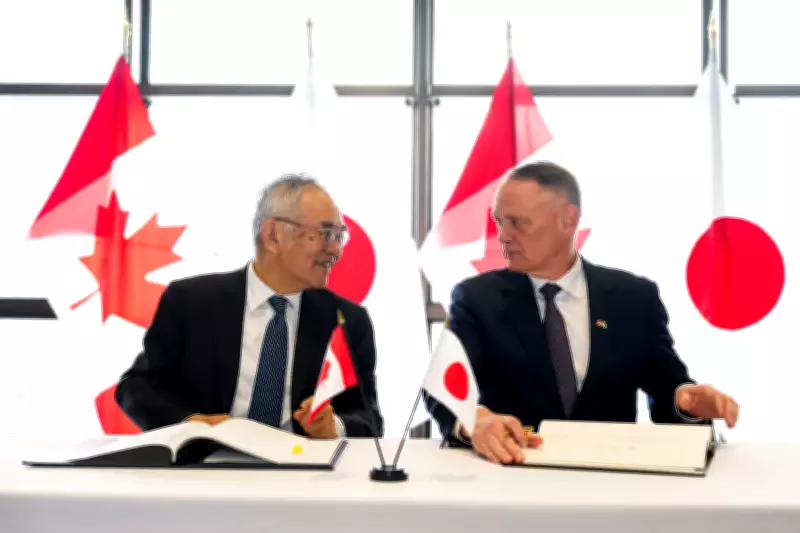
This commentary comes in the wake of strengthened bilateral ties, notably highlighted by the recent signing of the Canada-Japan Equipment and Technology Transfer Agreement. The ceremony, held at National Defence Headquarters in Ottawa on January 27, 2026, involved Minister of National Defence David McGuinty and Ambassador Yamanouchi, symbolizing deepening defense and technological collaboration between the two nations.

The ambassador's remarks suggest that such governmental partnerships, combined with favorable trade agreements like CUSMA, create a conducive environment for industrial expansion. Japanese automotive companies, known for their significant global presence, are likely evaluating Canada's strategic position within the North American free trade zone as a key factor in investment deliberations.
Implications for Canada's Automotive Industry
Canada's automotive sector, a cornerstone of its manufacturing economy, could see substantial benefits from increased Japanese investment. Enhanced production capacity would not only boost economic output but also create jobs and foster technological exchange. The ambassador's focus on CUSMA highlights how international trade policies directly influence domestic industrial growth and competitiveness.
As global supply chains evolve and geopolitical dynamics shift, Canada's adherence to and active participation in comprehensive trade agreements like CUSMA are increasingly viewed as vital for attracting foreign direct investment. The Japanese ambassador's statement reinforces the importance of maintaining robust trade relationships to secure economic opportunities in key sectors such as automotive manufacturing.